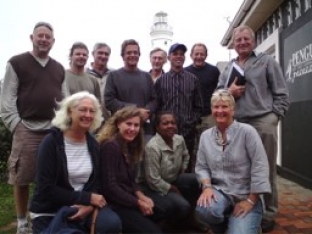
Leigh Dunn: The Coloured folk of Plett

Leigh Dunn: The Coloured folk of Plett

The Dunn and Harker families of Plett having a picnic at Robberg in 1948.

“The Coloured folk of Plett, how they were moved from the CBD by the Group Areas Act No. 41 of 27 April 1950, and a few related anecdotes”

– Presentation by Leigh M Dunn for the Van Plettenberg Historical Society, Plettenberg Bay on Thursday the 12th of July 2018 at 18h00

On the 24th of Jan 1993, family member – Shirley Harker spoke on “The Harkers of Plettenberg Bay”. The Historical Society then handed her the original foundation stone of the original Harker Residency of 1823, as a gift.

  1. The Time before the Group Areas Act in Plettenberg Bay:
  2. The Harker families of Plett owned most of Plett central (Church Street, Crescent Street, and Kloof Street, even Poortjies areas and also Harkerville)
  3. The well-known Nguni Restaurant at The White House theatre in Crescent Street was built by Thomas Harker;
  4. (The White House was not there, but the restaurant in front was their humble family home, as it stands today)
  5. It’s one of the very few Plett buildings that were not taken over by huge contractors, who try to change something so humble and beautiful, into modern structures that look totally out of place in our little town.
  6. The parking area below Zanzibar Lounge and the Chinese Shop below that parking area, used to belong to Reginald Carolissen, the husband of Dora Harker (whom I’ll tell you about soon);
  7. The little building just below the Chinese shop in Crescent Street where Colleen Kemp Physiotherapist used to be, then later it was a car dealer, and I think it is now an estate agent – that used to belong to Elizabeth Bertha Harker, the mother of my grandma Bertha.
  8. Albergo Backpackers in Church Street used to belong to Michael Muller, the husband of my grandmother’s youngest sister Gwendolene Harker
  9. Those are just a few starting off examples of how the Harkers owned most of Plett and of course most of Harkerville, starting with Captain Robert Charles Harker in 1823.
  10. My grandfather’s farm on the N2 at Harkerville was between The Potter and Strombolis, and today it’s still called “Die Hout Huis”, providing guest accommodation.
  11. It was taken from us.
  12. The rest of Plett central which did not belong to the Harkers, belonged to a few isolated families (which I will mention later. By the way. There were 6 white families living in Plett central, and that has been documented by Patricia Storrar. Luckily I did not live there those days, so you can’t ask me who those 6 families were). The rest belonged to government (like The Lookout Center that used to be the Police Station), and the rest of the CBD belonged to the St. Peter’s Anglican Church diocese, as I will explain shortly
  13. That’s why Formosa Place, is still St. Peter’s Anglican Church grounds, that’s why it’s called Formosa Place, because of the Parish of Formosa that the church falls under.
  14. The St Peter’s Anglican church still receives the rent from Formosa Place every month
  15. And the wooden structure right behind Formosa Place, in the Checkers parking area, where the new Hospice Charity Shop finds its home since early 2018, was one of the original classrooms of the St. Peter’s Mission school, all belonging to the Anglican Church diocese.
  16. That Hospice structure was a classroom in the school where my granddad was the principal (details and dates I will share shortly)
  17. Let’s get back to:

The Original Harker and Dunn families of Plettenberg Bay

  1. The History of the Dunn family of Plettenberg Bay

The first Dunns who arrived in South Africa originated from John Dunn (born 1824 from Scottish parents and grew up in Port Natal, later known as Durban). John Dunn was survived by 23 Zulu wives and 79 children. The British rulers in Port Natal at that time named him “The White Chief of Zululand.” His children were scattered all over South Africa.

According to research, one of John Dunn’s children was my great grandfather Michael Dunn (born 1851), who accepted a railway job in Somerset West.

He married Elizabeth King (a Coloured woman) from Heidelberg in the Western Cape.

(I have photographs of her. She was a beautiful Coloured lady. Could have hailed from the Malaysian slaves)

My great-granddad Michael Dunn died tragically in a railway crash during working hours, and his widow and children had to leave the railway house with immediate effect. That was in Somerset West.

To worsen matters, his wife then died at a young age, (probably financial and other stress)

and the children then grew up orphans, reared by a “White” family in Somerset West – the Van Wyk family. My granddad, who was one of those orphans, was the only one who got educated. All the other siblings went to work as taxi drivers and business people in order to survive.

At the age of 21, after completing his seminary studies at the Zonnebloem College in Cape Town, Michael William Dunn got his first job at the Diocese of Formosa in Plettenberg Bay in 1912.  That was the time that only 6 white families and a clergyman namely Reverend Breach, lived in Plett, other than the coloured families who lived there.

Between 1906 and 1910, the only building on the island called Beacon Island was an old shed, in which the locals kept their whale boats. It was late in 1910 that Norwegians arrived in Plett in 7 whailing ships fitted with guns. They then built a factory on Beacon Island and three other buildings.

Dunn was English speaking. The other Coloured families were speaking Afrikaans which is a mix between Dutch and Malaysian.

He became the first Coloured Headmaster of the first Multi-racial school in Plettenberg Bay, which was started in 1901 by Bishop Bull of the Anglican Diocese, namely the St. Peter’s Mission school in Bull Street (named after the bishop), where the Old Rectory hotel now opened on 15th August 2017.

The spa building of the Old Rectory hotel was the school where my granddad taught from 1912 until 1942.

My cousins Desiree, Caryn and Lynne from Toronto in Canada came to see the Old Rectory Hotel last year, when it opened, to see Granddad’s old school now being renovated. (I’ve put a post on facebook about their visit to that site).

I was told by so many locals who went to school there, how the school children would go and play on the beach during intervals, and then run back when hearing the school bell. One of them was Sally Johansen. Another was Iris Dickson. And when the school had a function or a special event, the children would receive their refreshments on Hobie beach during school time.

Then in 1942 the school moved to Main Street Plettenberg Bay (where Foschini is).

The school in Main Street became the Lions Hall in 1969 (The Lions is a society like The Rotary Club). My parents as teachers had to invigilate at many school concerts in the Lion’s Hall for many years. As a child, I attended a wedding in The Lions Hall in 1987, therefore I wildly guess that in the early 1990’s, The Lions Hall was renovated to become “The Square” where Foschini now is.  

Even though I am referring to the midst of the Apartheid years, the white and coloured communities sometimes did work together. They were segregated, but at peace with each other.

In 1978 my parents were very involved in the bi-centenary celebrations of our town since its establishment in 1778. Among the dignitaries at the festivities were Prof. Chris Barnard and State President B.J. Vorster. My Uncle Mike Harker and aunt Shirley Harker who were both councilors of our town, sat right next to those guys at the newly renovated Beacon Island hotel.

As a child growing up in the 1980’s, my dad sent me once a month to the old Plett Primary school behind the Post Office, just below Cornuti. I had to go and pay Mrs Mary Matthews, because she gave me piano lessons.

I remember always ringing the bell on the wooden gate. Then a prefect would come and open the gate for me. Usually a girl. She was shy and I was shy. I was not used to seeing white children at school. So I followed her very uncomfortably up the wooden stairs into the staff room to Mrs Matthews. That was once a month. I even behaved myself differently among the white children, I even walked differently.

  • The History of the original Harker families of Plettenberg Bay

Captain Robert Charles Harker was born in Ireland in 1781.

Harker retired as Major in the British army, but continued to use his rank of Captain. He was moved to Plett in October in 1823.

Captain Harker had an illegitimate son from an unidentified Coloured woman from Plett in 1825.

 (Captain Harker was the Post Master and the Justice of the Peace – in other words he was a judge and a postmaster. A very well respected man in the whole of Plett. So therefore the scandal was kept undercover)

That boy was named Henry Adolphus Harker, and was born on 1st October 1825, and was taken from his mother, to be raised by a “White” family namely the Sinclair family who was related to Captain Harker’s wife Maria.

After Maria Harker died in 1834 and became the very first person to be buried in the Historic Harker graves in Beacon Way (on the side of Poortjies) in Plett, which was then still part of the original Harkers’ property.

After his wife’s death, then only Captain Harker took his “Coloured” son and had him christened in George. He was christened in the Dutch Reformed church, and not in the Anglican Church where they belonged, because of the embarrassment of having a coloured son by someone else His “Coloured” son – Henry Adolphus Harker had a son with exactly the same name.

Henry Adolphus Harker the Second was my great-grandfather, and was born in Plettenberg Bay on 14th December 1881.

In 1904 he got married to Elizabeth Bertha de Reuch (She did not speak Afrikaans. She spoke Hoog-Duits, which is Dutch)

She then became Elizabeth Bertha Harker (my great-grandmother), the one who owned the property in Crescent Street below Zanzibar parking.

My great-grandfather Henry Adolphus Harker had a fishing boat. He caught fish for a living. I was told how his wife would never sleep at night if he was out on the sea. Many great mariners died in Plett’s waters. There were many good ghillies. The brothers Angus and Archie McCallum were some of Plett’s best ghillies during the 1st half of the 20th century. They were men with no fear of the sea, and could even predict the weather patterns. They earned up to R2, 50 or even R3, 50 a day, plus food, and plus wine as an optional extra. But to a coloured ghilly, alcohol was not an option. It was a necessity to survive those seas.

Henry Adolphus Harker’s eldest daughter (my grandmother) Bertha Dinah Harker was born in 1905. The other Harker siblings were Cornelius (he had property in Poortjies where Plett Primary is now, but first it was a sports field and it had a police office there) (1907), Dora (who lived where Zanzibar Lounge is) (born 1909), Henry (lived in Kloof Street Plett) (born 1910), Selina (born 1913), Rowland (lived in Kloof Street Plett)(born 1914), Alice (the one who moved to New York) (born 1917), Millicent (she got married Muslim, moved to Cape Town and got a new name Maimuna) (born 1919), Michael, husband of Shirley Harker (born 1921) and Gwendolene (who owned Albergo Backpackers, long before it was there) (born 1925).

  • The day when these two Historic Plettenberg Bay families became one family

Michael William Dunn and Bertha Dinah Harker got married in the St. Chad’s chapel in Harkerville on the 27th of June 1934 where they were the very first recorded wedding. [I am in possession of the original marriage certificate]

Bertha Dinah Harker was the headmistress of the St. Chad’s School at Harkerville at the time of their wedding. And Michael William Dunn was the headmaster of the St. Peter’s Mission School in Plettenberg Bay.

That was the moment that the Harker and Dunn families of Plettenberg Bay became one family.

My granddad Michael William Dunn built “Victoria Cottage” in Kloof Street in Plettenberg Bay central in 1937.

The property stretched all the way from the house behind FNB right up to Atmar Center, and the bottom part of Atmar center below Pep Stores, was also part of the Dunns’ property.

Their firstborn son (my dad) Mac Dunn was born in Victoria Cottage in 1938. Then their last born Derrick was born there too in 1944.

One of my granddad’s students Rachel Krigga (now Rachel Cedras and aged 76), tells me how far she had to walk from the church grounds near Poortjies where they used to live. She used so walk so early in the morning, in the rain and the cold, with bare feet. She then always made a halfway stop, at my grandfather’s place in Kloof Street, where my grandmother used to dry Rachel’s wet feet with a towel, and give her a cup of hot milk, every morning, before she would continue her walk to the little school in Bull Street, which was quite a long walk downhill still, in the cold and the wet weather.

My mother Joey and I are the last of the original Dunns still residing here.

…and from the Harker side we have the youngest daughters of Shirley Harker namely Sybil and Louise still living here.

They also own the original Harker residence cornerstone, from the official Harker residence belonging to Captain Robert Charles Harker and his wife Maria. That Harker residence property stretched from Beacon Road (where Plett Primary and the Harker graves are, to the area of Old Plett, between Church Street and Poortjies).

We are also in possession of many family heirlooms from as far as Somerset West, Harkerville and Plettenberg Bay, including building plans, newspaper articles and documented accounts, even marriage and birth certificates.

  • The Move (because of the Group Areas Act of 1950:

I spoke to one of the students of my parents in 1969 at the time that they had to be moved from their school in Main Street, to the school in New Horizons, namely Mirah Windvogel (now aged 64), and she told me that the students had to walk all the way from the old school in Main Street Plett to New Horizons. The teachers had to move the stuff on bakkies. They did not have trucks. 1 July 1969 the school moved to New Horizons.

When they arrived at their new school premises, the premises were covered with snakes, stones, rocks, it was a terrible experience. They had to clean up and work and it took quite some time, because the area used to be dense forest!!!)

Well, in 1961, Plett had a permanent population of less than 5000 people, (so I am sure there were more snakes.)

The first street lights in Plett were switched on at 8:30am on the 1st of December 1964 by Mayoress Kate Martin. Yet New Horizons township only received electricity 15 years later in 1979, and the teachers remember how they spitefully left the lights burning for an entire week, so that the whole community could see that their school now was lit up.

  • The Harker families lived together in central Plett, all the years, so when they had to be moved, because of the National Group Areas act, the Harkers decided to buy a group of family plots in Ashleigh farm (currently known as New Horizons township) and became the very first residents there in 1968
  • The very first house in New Horizons was the home of Robert and Mary Harker on the corner of Keurboom Road, right opposite the new library. It now belongs to the family of Smakes Witbooi.
  • My mother Joey moved to Plett in 1964 as a young teacher
  • Here in Plett were no lootings, no riots, no burning of tires, no burning and destroying public places, no obscuring the N2, and no political violence.
  • Plett was a peaceful place.
  • The only Black family was the Grootboom family
  • Johannes Grootboom was a sidesman in the St. Peter’s Anglican Church, and his wife Margaret was a housewife. They had many children and my mother taught them all. Christina, Hermina, Justine, James, Johannes, and Regina was the youngest.
  • Their daughter Justine’s son is a pharmacist in Clicks at Market Square at the moment. (What a beautiful and proud achievement for Plett)
  • There was no Bossiesgif, except for the Grootbooms living there.
  • The next Black family was the Skosana family who moved to Plett from the Transkei in the Eastern Cape, to come and be domestic workers in holiday homes.
  • And there were no other Coloured families owning property in the Plett CBD except the Harker and Dunn families, with the Harkers owning most of the land.

George Langdown refused to move, and made Sunday Times Headlines on the 11th of February 1973. People were evicted from 1968 in the Plett CBD, my granny Bertha in 1972, and George Langdown was the last coloured person in 1973, who refused to move, so they forcefully moved him and demolished his house in Langdown Street, with a bulldozer. Since then it was named Langdown street.

  • There were no Indian people living in Plett by the 1960’s except Toppa Reddy who came to Plett as one of the constructors of the new Beacon Island hotel which was designed by world-class architect Prof. Helmut Hentrich of Dusseldorf in West Germany and opened in 1972. But if you ask the Plett coloured folk of 1972 what that new modern hotel looked like to them, you’d hear that George Langdown said the following: “That hotel looks out of place here in our bay. It looks like nothing but a huge ship that’s been stranded on the rocks”.
  • I wish to say the same about that ugly new court building. It looks out of place here in our little town
  • Well, I still have close contact with Toppa Reddy’s son Stanley Reddy who is now 60 and living in Johannesburg
  • During that same year, Joe Moodley, age 75, who still works at Beacon Island at this moment, was also transferred to Plett from Durban, to work at the new hotel. He here married a coloured lady Margaret Payle and they are still living in the Beacon Island flats in Piesang Valley. I went to school with their children Jessica Moodley and Alistair Moodley.
  • Joe Moodley was the first head porter for Sol Kerzner who owned the Beacon Island Hotel in 1972 when it opened.
  • The other Coloured families of Plett all lived in Keurbooms River; Bitou (Bitou was the area that stretched from Old Nick down to Wittedrift); the Coloured folk also lived in Redbourne area, with the Griekwa people moving to Kranshoek during Easter of 1920.  
  • Then in the Crags there were Coloured families, as well as “Basters”.
  • Basters were Coloured people who were “light skinned” and wanted to be classified as “White”
  • They did not mix with the Coloured people
  • They did not even attend the school where my grandfather was the principal.
  • They even had their own “Baster school”, at the Crags.
  • Some of the Basters were the Dicksons and the Barnados. Winnie Barnado got married to Dick Earp-Jones in the 1980’s. (Inter-racial marriages were against the law, so Winnie obviously somehow had herself classified as white)(It happened, because my grandmother was offered two ID documents as I will explain)
  • The following were the most well-known Coloured families in Plett, from the different areas:
  • The Windvogels lived in Gansvlei (Goose Valley Area); The Macleans, McCullums, Kamfers, Plaatjies, Bruiners and Figeland families came from Bitou; The Barnados lived in The Crags; The Windvogels lived in Wittedrift;
  • All the rest of them later moved here from other places.
  • All those who now reside in New Horizons, lived on the St. Peters grounds, (St. Peters Anglican church owned lots of ground in the CBD. That’s where George Langdown lived and refused to move.
  • St. Peter’s ground spread all the way from Church Street, right down to Poortjies)
  • Most of the Coloured families who did not have their own homes, lived on the St. Peter’s grounds, before being moved to Ashleigh farm, opposite Weldon farm, but later given the name New Horizons township.
  • Most of the Coloured people were fishermen, ghillies (a ghilly would carry your fishing gear and help with bait etc), they were also carpenters, builders, and their wives were domestic workers, and later a very few of them also became teachers, nurses and police officers.
  • All the shop assistants in Plett were white people.
  • The top positions in Plett for white people were: working in butcheries, weighing the meat. (How times have changed).
  • Those days they had to weigh the sugar, weigh the rice, and weigh the flour. Even weigh the tomatoes, my mom says.
  • Nothing was pre-packed. It was weighed, put in a paper bag, and sealed with selotape. (very environmentally friendly. I wonder who invented the stupid plastic shopping bag)
  • And the Coloured people had to call the white shop assistants “Mies” and “Baas”.
  • (If you don’t understand Afrikaans, “Mies” is “Miss”, and “Baas” is “Boss”)
  • Isn’t that ironic?
  • The one who serves, is actually the servant, but has to be called “Baas”?
  • In fact they were the servants, because they were the shop assistants, so they had to serve you.
  • Nowadays you don’t see a white shop assistant. They could be floor managers perhaps, but most shop assistants nowadays are Coloured or Black.
  • The first public buildings in New Horizons were: (Theodora Creche – donated by Doctor Andrew Roberts and his wife Sally Roberts (the parents of Dinah Eppel, and the Roberts family home was where Down to Earth restaurant is now, right on the Bitou river) Theodora crèche opened its doors on 1 Aug. 1968 and Shirley Harker was appointed the principal;
  • Formosa Primary was opened on 1 July 1969 and when my grandfather Michael William Dunn died, Reginald Cariolissen the husband of Dora Harker became the principal;
  • At that time New Horizons had no shop, no church, and just a few private homes. They had church in a classroom in the school.

My granny’s new house in New Horizons was obviously not as spacious as her home in kloof Street, but still she loved gardening. And I remember playing on that lawn as a child as well.

The sad moment when the house in Kloof Street was demolished, to build  the Melvilles Corner parking area in 2002.

(That made news headlines, seeing that my granddad built the house in 1937, then Victoria Cottage became the first Publicity and Tourism Bureau in 1991, and the Belhambra tree that was planted on that property in 1881 when plots were demarcated in the Plett CBD, also had to be uprooted)

(When they demolished that house, the mayor Euan Wildeman told my dad that we would be paid out a land claim, but we did not get a cent from Bitou Municipality or from anyone. We stood and watched them demolish Victoria Cottage and my dad took the photos)

  • There were obviously many sanctions against our country because of the Group Areas Act and because of the Apartheid laws.
  • South Africa was not allowed to trade with the major countries of the world.
  • I saw at the Opening of the Plett Afridocs festival, how Miriam Makeba herself encouraged the UN to implement sanctions against South Africa, and how she only moved back from Belgium after Madiba’s release in 1990.
  • It’s really sad, when you think about it.
  • And the exact year when those sanctions were finally lifted against our country in 1992, the first ever “non-White” Miss South Africa was my cousin, Amy, also a direct descendant of the Harkers of Plettenberg Bay. (I told you that Scottish and Zulu blood makes a beautiful mix)
  • I also have relatives all over the world, because during the 1970’s, many of the more affluent Coloured families decided to rather immigrate, because they were not willing to expose their children to the rife Apartheid laws and segregated education.
  • So other Harker descendants abroad at this moment are: The Philander family in New York; The Alison family in England and Germany; and the Brookes family in Queensland in Australia.
  • I visited my relatives in Australia about 20 years later in 1999, and I visited a few other relatives abroad as well. This year I was in Germany and Austria, visiting my cousin who is married there. I went for her mom’s 80th.
  • How blessed and fortunate I am, and all thanks to the Apartheid government, that chased so many of my relatives abroad. Because they are doing so much better there today, than they would ever have done here. And I have the bonus opportunity of traveling there whenever I like.
  • The Land Claims by the Coloured folk of Plett:

Even a land claim of a very small remuneration per family, will never be able to make up, what so many families went through, and how many losses they had, because of forced removals out of their homes

My granny received R19 000 for her property in Kloof Street, which was worth millions.

Further the government gave each one of the Harker and Dunn families an amount of R30 000, for properties worth far more than millions of rands. There is simply no comparison.

I remember when my dad got his R30 000 and had to give half to his brother Derrick in Johannesburg. Uncle Derrick then gave R5 000 to each of his 3 children. So to get R5 000 for something that could have given you millions in return, is just unbelievable.

Yet the family still looks back on the beautiful memories with gratefulness.

  • I end with a few Anecdotes:
  • How the Apartheid years in Plett does not only have bad memories but many good ones to many coloured families;
  • My dad who was born in Plett in 1938 had many white friends here in Plett. (Plett residents: Marie Monk and Joan van Rensburg knew my dad before the Apartheid years and they grew up together as peers and school friends, just to mention a few locals, also the late Dulcie Oosthuizen . And even throughout the Apartheid years, they, and many others, remained loyal to each other as true friends. Nothing stopped them)
  • One other little story of my Dad is: How he refused to help someone carry a heavy article into a “Whites only” section at the Old Post Office; (every shop in Plett had 2 entrances)
  • And the shops that did not have two entrances, the non-Whites had to buy through the window
  • My dad laughed a lot when he told me these things, and to me who did not grow up during those times, it sounds like total madness
  • I quote the following from page 76 of the book “Cry the Beloved Country by Alan Paton – the book that was written in London in September 1948 and been banned in South Africa because of Apartheid”:
  • “There is no time to talk of hedges and fields, or the beauties of our country. Cry our beloved Country. Cry for the broken tribe, Cry for the law and the custom. Cry for the man who is killed, for the women and children bereaved. Cry, the beloved country, because these things are not yet – at an end. The sun pours down on the earth, on our lovely land, that man cannot enjoy…There are voices crying – what must be done. A hundred, a thousand voices. But what do they help if one seeks for counsel, for one cries for this, one cries for that, and another cries for something which is neither this nor that. ”
  • As I mentioned, many of the light-skinned coloured people like my grandmother Bertha, were offered 2 ID documents. On her one ID she was white and could get special privileges. But then the family had to wait outside. And on the other ID she was coloured.
  • Well, My granny was also offered a renewable permit, to remain in her house in Kloof Street, because of her skin colour, whereas the other coloured folk were not. So she refused, out of loyalty to the rest of her family.
  • I was also told how the name “Bossiesgif” derived from the words “Bishop’s Gift” (as I mentioned this on a previous Historical society meeting in March 2018). (because most of the land that the coloured and Black people were living on, belonged to the Anglican church diocese).
  • The predominantly Afrikaans-speaking Coloured and Black folk could not pronounce the word “Bishops Gift” so it became “Bossiesgif”
  • In Conclusion:
  • I firmly believe that what our political leaders are endorsing currently, namely “The expropriation of land without compensation” is totally wrong.
  • Whether it was done by law, or under the Group Areas, or whether it is done the way it is being done in our country at this moment in time, it still remains wrong.
  • Even according to world Constitutions, and according to world religious Scriptures, it remains wrong to take something which does not belong to you.
  • Let us, as a unified Plett, stand up for what is right, let us stand together as different communities, and let us also continue to preserve what is ours, and what many of our ancestors have worked hard for.
  • Not through toyi-toying, not through strikes, not through riots, not through damaging and breaking down, but by proudly building up what is ours
  • I end with a quotation from page 261 of “Cry the beloved Country”:
  • “And now for all the people of South Africa, our beloved country – Nkosi Sikileli iAfrika. God save Africa. That men would walk upright in the land where they were born, and be free to use the fruits of the earth. What was there evil in it? Yet men were afraid, with a fear that was deep, deep in the heart. A fear so deep that it hid their kindness, or brought it out with fierceness and anger, and hid it behind fierce and frowning eyes. And such fear could never be cast out, except by love…”
A History of the Nuclear Struggle in South Africa

A History of the Nuclear Struggle in South Africa

18 January 2018, Mike Kantey, National Chairperson Coalition Against Nuclear Energy (CANE)

Download the presentation

Atoms for Peace

Address by Mr Dwight D. Eisenhower, President of the United States of America, to the 470th Plenary Meeting of the United Nations General Assembly, Tuesday, 8 December 1953

“The United States knows that peaceful power from atomic energy is no dream of the future. The capability already proved, is here today. Who can doubt that, if the entire body of the world’s scientists and engineers had adequate amounts of fissionable material with which to test and develop their ideas, this capability would rapidly be transformed into universal, efficient and economic usage?”

Early resistance to nuclear weapons

The Campaign for Nuclear Disarmament (CND) March of 1958

Going back in time

Historical forces drove the South African Government’s choice of nuclear technology

1961 South Africa gets a research reactor from the United States
1977 Nuclear weapons test site spotted in the Kalahari
1979 Ballistic missile tested with Israel near Prince Edward Island

Like Siamese Twins

The origins of nuclear energy are intimately tied to the origins of the nuclear weapons industry

1979

Equipment failures and worker mistakes contributed to a loss of coolant and a partial core meltdown at the Three Mile Island Nuclear Power Station , 15 km southeast of Harrisburg, Pennsylvania, in the United States of America. Although no fatal results have been attributed to the near meltdown, Stephen Wing et al have shown some indication of elevated cancers in the wake of the accident. (“A Re-evaluation of Cancer Incidence near the Three Mile Island Nuclear Plant:The Collision of Evidence and Assumptions” in Environmental Health Perspectives, Volume 105, Number 1, January 1997

Meanwhile, back in South Africa …
PW Botha’s nuclear industry obtains German and French support

  • Koeberg Nuclear Power  Station
  • Pelindaba and Valindaba (enrichment and fuel fabrication)
  • Advena Central Laboratories (nuclear weapons production)
  • Vaalputs (nuclear  dump site)

A Cold War ideology of “Total Onslaught” leads to an Apartheid State of “Total Strategy”

  1. Koeberg Nuclear Power Station, 28 km north of Cape Town
  2. Pelindaba, west of Pretoria
  3. Brazil, near Kommaggas in Namaqualand
  4. Bantamsklip. near Gansbaai in the Western Cape.
  5. Thyspunt, near Cape St Francis in the Eastern Cape 

The Road to the PBMR

  • 1981-1986 Kelvin Kemm, a potential beneficiary of the PBMR through Silver Protea Technologies, is departmental head of Armscor from 1981 to 1986
  • 1989 Johan Slabber joins Armscor electronic systems supplier Integrated Systems Technology (IST), along with other AEC staff members
  • 1990 Armscor appoints IST to do a feasibility study on the PBMR as a source of propulsion in a nuclear submarine; under project leader Chris Oberholzer.
  • 1992 IST receives Armscor approval to investigate the PBMR’s commercial potential through Dieter Matzner.
  • 1993 Eskom  “investigates’” the PBMR option, claiming that  “building a new traditional Pressurised Water Reactor (PWR) such as Koeberg would be prohibitively expensive

Getting into GEAR: Alec strides forth

  • 1994  National Nuclear Policy Workshop, hosted by the ANC’s Science & Technology Desk (then chaired by Roger Jardine, later head of nuclear build beneficiary Aveng), calls for a review of the nuclear industry.
  • 1995 GEAR macro-economic policy chosen as the sole determinant of industrial strategy, including the principles of “mineral beneficiation” and the importance of “foreign direct investment” (FDI), leading to the encouragement of energy-intensive large smelters and metal-working plants.
  • 1997 A Joint-Venture Agreement is signed between Eskom and IST Holdings (Pty) Ltd to “build and license PBMR power plants in South Africa and other parts of the world”. The shares in the JV  will be 51% Eskom and 49% IST.
  • 1999 Alec Erwin becomes Minister of Trade & Industries and the PBMR’s official champion as along with Coega  as DTI’s  flagship for an aluminium smelter, powered by the PBMR, with a further commitment to purchase 30 reactors (six each for the five designated sites), and a drive for export sales

2001 COSATU Resolution
Passed unanimously at its 7th National Congress

Enter AREVA and the French Connection

  • French nuclear industry giant Areva is offered “industry technology rights and cooperation” in  the PBMR reactor programme.
  • Areva says the deal could include fresh fuel supply, waste management and power transmission & distribution.
  • CEO Anne Lauvergneon is appointed to the President’s Economic Advisory Committee.

The State of the Nation, 2007

  • President Mbeki commits to the nuclear industry in 2007.
  • Nuclear Energy Policy approved by Cabinet on 8 August 2007,
  • The lack of adequate consultation leads to the founding of the Coalition Against Nuclear Energy (CANE), whose founder members include the Namaqualand community, the Pelindaba Working Group, and the Koeberg Alert Alliance, among others 

Before the Crash of 2008

  • The PBMR having been fairly well abandoned in the short term, tenders were issued for either a Toshiba-Westinghouse AP1000 or an Areva EPR, then under stuttering construction in Finland. Projected costs of these monsters were about R120-billion each.
  • In his 2007 Budget Speech, Trevor Manuel warned that “in an economic discussion, it is not appropriate to throw numbers around without a sense of rigour or without some interrogation”
  • Here’s what the August  and London-based Financial Times  had to say:

    The [UK] government’s energy review team … concludes that by 2020 nuclear power will remain more expensive than wind generation and about the same cost as electricity produced from power stations burning specialist green energy crops, unless electricity prices rise or it receives state financial help …

Christmas 2008: Eskom throws out the nuclear baby with the radioactive bathwater

  • Long-standing spokesman Tony Stott indicated that Eskom would no longer be driving the programme:
  • The future of nuclear is bigger than just Eskom now …The government will now play a bigger role in taking it forward because the nuclear build is important for the development of the country’s capabilities.
  • Former Director General of the Department of Public Enterprises, Portia Molefe states that a “nuclear task team” would develop “a framework for procuring a nuclear technology partner to support both the nuclear power station build programme and the associated industrialisation process.” 

Current decision-making processes with regard to “Nuclear-1”

  • The current implementing agent for electricity production is Eskom, which is currently governed by the Department of Public Enterprise .
  • The erection of a nuclear power station cannot proceed without two steps: 
    1. The Environmental Impact Assessment (DEAT) 
    2. The Nuclear Licensing Process (the NNR)
  •   The Department of Environmental Affairs recently granted permission for a nuclear power plant of unstated origin to be erected at the Koeberg site.

Civil society and public involvement

Deficits in accountability and transparency

  • Despite being utterly flawed, the Integrated Energy Plan and Integrated Resource Policy were hastily approved by Cabinet.
  • Substantive opposition to nuclear energy was overruled by “policy considerations”.
  • The nuclear energy policy itself was drawn up in defiance of the ANC’s own constituency and without adequate consultation among the broader public.
  • The Environmental Impact Assessment process was only intelligible to a handful of the reasonably informed and has been taken on appeal.
  • Much of the information selected and presented as “science” is provided by the proponent (Eskom) and many of the “scientists” have been employed by the proponent in the past, or hope to be employed again, so there is no sense in “biting the hand that feeds you”.
  • The decision-making process itself is equally opaque and no real public justification is ever given for decisions taken, other than vague generalities and abstractions: “it’s good for the country”, “it will create jobs”, and so on.

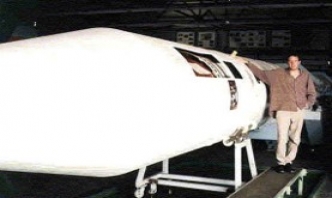
A Russian WWER under construction

Our demands

  • Since the National Nuclear Regulator has a critical role to play in monitoring and supervising the industry itself, from the cradle to the grave, it must be strengthened.
  • The dumping of nuclear waste in Namaqualand should be halted with immediate effect.
  • All information relevant to the current Nuclear-1 procurement process must be released without further ado.
  • The precise nature of the technology choice must first be identified before any EIA is possible 

The future is brighter, without nuclear power

GUY BUTLER (1918-2001) – South African poet, academic and playwright

GUY BUTLER (1918-2001) – South African poet, academic and playwright

David Butler, Headmaster of Greenwood Bay College in Plettenberg Bay speaks about his father Professor Guy Butler.

The following is a transcript of David’s talk which is largely unedited.

“I am fully aware that a lot of you may have known my father either as students or colleagues and you might well have something to add. Please feel free to ask questions as we go so that you can expand or clarify as we go, I am aware that I am not the right person to be giving this talk. Because as his son to me he was a father. To me he was a father and not a public figure – not a colleague – I was not far away enough to see him in the big landscape in which he moved. Today I will be trying to give you an idea of who he was and will try and sketch some of his more important achievements as I go along.

Born in Cradock, in the Eastern Cape in 1918 – the family were sent out – to try and improve their health. People were sent out to drier climates to try and improve respiratory diseases. He went to the local school in Cradock, – his father Ernest and mother Alice were Quakers – with a very strong pacifist agenda. He attended Cradock Boys High – a tough school – not long after the Boer War and there was still some antagonism between language groups.

1918 would have put him in his early teens during the Great Depression and that had a massive impact on him and the family in Cradock as well. It made his choice of course in lifeless of an option. He actually wanted to be a painter and was quite a good painter when he had the time to do it.

His father Ernest insisted he do a degree that would make him employable – he was advised to forget the fine art thing and do something more useful.

He had to borrow money from his sister and did a lot of carpentry to get himself through university. My grandfather was a highly skilled cabinet maker and he taught my father how to work with wood – particularly Rhodesian teak. One of the sources of funds to go to university came from making Rhodesian teak dining room suites. His father taught him to work in wood – If Ernest had anything to do with it you can believe they would still be very serviceable today. He retained his love for wood until he died.

He went on to Rhodes and read English and History. He won a Queen Victoria scholarship to do a masters degree. When war came he joined up and went to North Africa as a Sapper–which was difficult for him with a pacifist Quaker background. He had a younger brother and three sisters.

His younger brother Geoffrey was blown up in that war – he wasn’t killed but lost his left arm and badly injured his right hand and face. Geoffrey was very clever and he wanted to be a scientist – needed his hands to be a scientist – so he became a historian instead. He was an accomplished historian and became a Professor of History at Wesley University in the States. That injury to his brother traumatised Guy and affected him deeply.

After the war he went to Oxford and did an MA at Brasenose and came back and lectured at Wits. It wasn’t long before he took a post at Rhodes – going kind of full circle. He was appointed at 32 as the youngest professor ever appointed at Rhodes.

Just to make a connection between you guys and my Guy, he started the Grahamstown Historical Society – with a number of other people and I have to say it became the bane of my life – as a little boy I was dragged along on numerous outings – we would go and visit a pile of stones in the bush somewhere or someone’s farmhouse from the frontier war or whatever.

There were no other kids on these outings so I always had a dislike for Historical Societies.

Now back to Guy at Rhodes – where he married my mother, Jean Satchwell, with some difficulty as she also loved a journalist called Tony Delius – a very erudite man and a great poet in my opinion. She dumped Guy and got engaged to Tony and Guy had to hurtle back and convince her this was a mistake and eventually they did get married and bought a house called High Corner – now a guest house in Grahamstown. The story of their relationship and the story of his life was very tightly bound up in this house.

It was owned by Dr William Atherstone who was a district surgeon, and then by Thomas Stubbs and subsequently became the Grahamstown Gentlemans Club.

Guy’s passion was the English language in South Africa in the forties, fifties and sixties – the nationalist government was in power with an antagonism to liberal politics. Guy was a crusader for the status of the English language and its status as the language the 1820 settlers who contributed so much to the culture and history of this country. The message he was bringing in those days was not a particularly attractive message. He was up for the fight. He wasn’t afraid to come forward. As kids we were largely unaware of this. He was active in the Progressive Party and he was socially and politically engaged. His view of literature came in for a lot of stick. He was a new critic and in the sixties dialectical materialism and Marxism was the coming thing. People felt he was not politically and socially engaged enough and was peripheral to the real issues. Guy Butler’s influence on that generation was enormous. He was keen to get South African English literature onto the syllabuses. Rhodes was the first university to have a South African English literature component option to their honours degree.

To go back to his achievements at Rhodes and his time in Grahamstown.

There are so many: Connected with his interest in the 1820 Settlers, he teamed up with a chap called Tom Barker, the United Party MP for Albany, who wanted a monument to the 1820 Settlers. Guy was instrumental in saying “look we don’t want another statue we want a living monument, something that is going to contribute culturally to the country.” He was responsible for the 1820 Settlers Monument in Grahamstown. It may not be called the 1820 Settlers Monument any more. The Grahamstown Foundation is in charge of running it. It was a huge achievement and was instrumental in the establishment of the Arts Festival in Grahamstown.

The festival was built around the monument. He was a committee man, he was really good at sitting on committees. Every afternoon he would be attending committee meetings. The government of the university senate and council, the 1820 Settlers Foundation, he also started the National English Literary Museum which is in a really prestigious building. They have built a fabulous building to house that. He started the Institute for the Study of English in Africa. He was a founding editor of “New Coin” with Ruth Harnett.

He started the Drama department at Rhodes and was instrumental in getting the theater built and he started the School of Journalism. He was a teacher, poet and dramatist. He was actively involved in all sorts of other things. One of the things that I remember well is his passion for houses. He bought an old house with Jean, a ruin, a huge old place, he was expected to demolish it and rebuild. But thank heavens he didn’t. Part of it was the oldest house in Grahamstown – Messengers Cottage built in 1814. He gradually built this place up – chopping bits of it off to let out as flats and so on. But it didn’t end there. In the course of his life he bought and renovated

17 houses in Grahamstown –these were all old run down settler cottages, built in the 1840s to 1860’s – they were not chic in the way they are today, they were on the verge of being pulled down. It was not a case of him having deep pockets and buying in contractors to go in and fix them up, he rolled up his sleeves and did the physical work on these places himself. I remember one night in George street he was pushing a plate through a circular saw and cut his left index finger off. This was particularly gruesome for my mother who was the radiographer at the hospital. He was delivered to the hospital with this severed finger and she had to do the xrays and so on. His hair turned white pretty much overnight at the shock of it. They tried to graft the finger back on again but that didn’t take and it was amputated and they transferred tendons across and he operated quite well with one less finger.

The church was central to his life, he was a committed Anglican. His ideas about Christianity was were very closely linked to his ideas about literature and tragedy in particular. Without going into a lot of detail about this feature of his life, his big mission was to try and synthesise the kind of dual nature he experienced. Being a South African he felt himself very much rooted in South Africa but having a European cultural heritage. Was he a

European who was no longer in Europe or a South African with European heritage an internationalist or just a European? He tried to find a way to create an authentic South African identity for a white English speaker. He came in for a lot of stick for how he went about that. He tackled a difficult subject and to my mind did a great job.

He was a very absent-minded person. He drove a car in a terrifying way. He never used the rear view mirror and seldom went beyond 2nd gear – we would have traffic backed up behind us. In fact he didn’t have a car until he was about 40. He bought a rusty second hand Opel. Because he was a university academic, his children got scholarships to private schools. My brother and I went to St Andrews which was a very elite school with children being dropped off in Rolls Royces, and Jaguars and so on. He would drive us to school in the rusty Opel. We volunteered to walk most of the time. On occasion he would insist on coming to fetch us. One particular half term the street was lined with these glistening cars and we could hear him coming up the road from a very long way away – there was something wrong with the silencer. He performed a u-turn in front of the school in the process of which a piece of the exhaust pipe fell off the car. He was not at all embarrassed by this kind of thing. He stopped the car and picked up the pieces, so it could be fixed properly and cheaply. We were there, cowering below the window line. He was wonderfully oblivious to that kind of snobbishness or pretentiousness about material things.

When we were kids the house was full of people all the time. My mother was a great entertainer, she had her demons and suffered from depression, but when she entertained she was just brilliant. She had a way of knowing who needed “jollying along” and they had great parties night after night. We children were the waiters and we would come and clear the table and so on.

At the table would be a kind of Who’s who of South African literature. I will just mention some of these people. Uys Krige would come for a weekend and then stay for two weeks– he was a terrifying bloke for little children – a small, bald man who was an insomniac. So if you happened to get up in the night to go to the loo or something, he would tackle you on the landing and then harangue you about very abstruse topics. Alan Paton would similarly come for a short while and stay forever. Until such time as my mother couldn’t bear it any longer. Alan drank a bottle of whiskey a day, he would ensconce himself in some part of the house and work his way steadily through the bottle – he was a very cantankerous chap. There were others. Laurens van der Post was there in several occasions. He would wear a grubby maroon velvet dinner jacket. As kids we thought he was incredibly odd and boring. Richard Brive, David Wright – all sorts of illuminati of the South Africa literary world. Douglas Livingston, Jack Cope, Nadine Gordimer and many others. Sidney Clouts was a great friend. He came to Rhodes to do a Masters. He and Guy really formed a kind of writers relationship and became great friends. They used to visit Sidney and Marge in Golders Green. Lots of people would come through the house and they would have great parties.

Guy loved arguing and fighting with people. He made a long dining room table out of some Yellowood planks taken from The Deanery which they rebuilt in Grahamstown. This table could seat 14 and he would sit at one end with the main antagonists sitting close to him and gentler more civilized people would sit down towards my mother’s end of the table. They would go at it hammer and tongs. It was all in good spirits, but they loved arguing.

Guy loved music, classical music, especially Beethoven. He could put up with a bit of Vivaldi and Mozart. Bach he liked. But Beethoven was his thing. He didn’t have a very good hi fi, he made one out of a big speaker and one small one, so it had good bass. He had a valve amplifier which I gather today is just the thing. He had a bunch of 78 records which he played on a central spindle, he wasn’t very good at looking after these things so they were very scratched. Some almost had canyons in them. This did not deter him. He cranked up the volume full ball. It would start very early in the morning. He kept unusual hours, he would start at 4 in the morning and he said his best work was done early in the morning. He went to bed early.

While he was working – he would play Beethoven. I hated it at the time but have come to see some merit in his taste. He was a great friend to a lot of people that people don’t know him for. He corresponded with a number of people in jail. They weren’t just there on political charges but criminal charges as well. He had a real sympathy for the underdog and for those who had stumbled. He sent them books and financial aid and paid for them to study through Unisa and various correspondence courses as well. A lot of important Cradock people were his friends. You might have read some of his work. I thought I would mention one play in particular. “Richard Gush of Salem” was core to his field of interest. Richard Gush famously walked out when Salem was under attack without his shirt on to show he was unarmed and brokered a piece with the attacking army. He was struck with admiration for the bravery of the man and his Christian beliefs and so on. Guy came under stick for this kind of liberal view of such things. That somehow or another these gestures mitigate dispossession and the bigger political issues. His Liberalism hasn’t aged well but there is still a place for it.

FEAST AND FAMINE’ – The Fishing Industry of Plettenberg Bay

FEAST AND FAMINE’ – The Fishing Industry of Plettenberg Bay

A talk given by Karin Kastern

In the Knysna Plett Herald of 24 August 2017, we are introduced to the youngest leaders in the fishing industry of Plettenberg Bay, Wayne Craig and Peter-Blaine Dodds.

I will take you back, and relate some history of how these young men can look into the future, and make their mark on the painting, which is “the History of the Fishing Industry of Plettenberg Bay”.
Plett was a fishing village long before it became a tourist destination. Cast your mind back, there is evidence of a fishing industry all over Plett , from whaling, to squid, to hake, these are the industries that have shaped, to a great extent, the history of our beautiful town.

The history of human life in Plettenberg Bay stretches back to 120 000 BC with Stone Age Man. We see traces of their lives in two caves, known to us as the Nelson Bay Cave on the Robberg Peninsula and the Matjies River Rock Shelter near Keurboomstand.
When the ocean was close, fish was on the menu. Shell middens dating back 3 000 years, as well as a number of remaining fish traps, bear witness to this.
In an era of discovery and adventure, as Europeans built their ships and travelled the world, early explorers travelled the African Coastline and made great discoveries. In 1487 the Portuguese explorer Bartholomew Dias, and in the winter of 1630 the large Portuguese ship São Gonçales became the first recorded European visitors to Plett, they did not stay long.

In 1763 the timber industry started in the forests of the Southern Cape. Our town became one of the ports of export of this valuable commodity. Horses dragged the wood out of the forest and oxen swam it out to waiting ships off our beaches. The Timber Industry flourished! At last! It is 1797 and we become aware of a formal fishing industry in our Bay.

While the Dutch East India Company had started commercial whaling in South Africa at the start of the 18th Century, it was only after they opened up the whaling to other foreigners that this industry took off along our coasts. An English merchant, John Murray started controlling the whaling industry. Plettenberg Bay was identified as one of six places nationally, where the industry flourished.

The first cargo of whale oil left the shores of Plettenberg Bay in 1834. A number of names stand out as major roll players. Sinclair, Cornelius Watson, Percy Toplis, the Thesen family, Jacob Odlands, who invested heavily into infrastructure on Beacon Island, whaling steamers, a meat boiling plant, an electric-lighting plant and teams of whalers all for what they hoped would be a lucrative business. The placid Southern Right whale was harvested.

Whaling operations ceased abruptly in 1916. “Thankfully,” we say, as we now value whales so differently. The First World War had prevented the export of oil to England and stopped the industry in its track. Parts of the iron slipway are still visible today as well as a boiling pot on the Island, and the many street names and even some dwellings of that time are preserved.

Another short-lived exploitation of what the ocean yields, was that of seals, for their pelts, oil and meat, and the genitalia of the adults. This happened in the late 1800’s. The government responded to a public outcry by conservationists and suspended all harvesting of seals.
In the 1960’s Commander Cobbold and Jock Hunter ran fishing boats in Plettenberg Bay and sold their wares to the “Irvine and Johnson Depot” located in the old post office building (now Hola Café). This depot was called “Robberg Visserye”. The Ollemans family took this business over and set it up in the Noel Centre “the red brick Georgian style building” in Main Street, Plett. This building belonged to Mrs. Ollemans. Malcolm as a bank clerk from Cape Town visited his friend Louis Ollemans in Plett. And, in 1979 Malcolm Craig took over that business as a small retail fish operation. He saw a business opportunity in creating an outlet for fisherman to sell their catches

Legend has it – and I love telling this story to my customers about “the beginnings of Robberg Fine Foods” – that Malcolm, being a fisherman too, would row out to sea in the early morning to fish. Once he’d caught enough, he rowed back and sold his catch on the beach and later from the red brick building on Main Street. The rowing boat, in fact, was a ski boat! And Malcolm had contracted other boats too, to supply a beautiful variety of fresh fish to “Robberg Fisheries and Robberg Butchery”. The outlet we all got to know in the 1980’s.

Also squid. Was it not interesting that this commodity was used as bait and not for eating! Chokka bait was transformed into squid or calamari which graces most menus in our town, our country and the world! But I am getting ahead of the story, Malcolm was joined later by the late Peter Dodds. Peter brought to the business his “little black book” of amazing recipes as he had a particular flair for making any fish dish a delicacy and a feast. Who does not remember The Islander Restaurant, where these masterpieces came to the table night after night?

Together they expanded the business into fishing, processing, retail and wholesale distribution. In the early 1980’s, the supply of line caught squid grew as the demand from overseas grew and vessels as far and wide as Oyster Bay were bringing their squid to Plettenberg Bay and selling it to Robberg Fisheries. They recognized the potential of squid and became involved in pioneering the Squid Export Industry.  In 1983 operations were relocated to larger premises in the industrial area of Plettenberg Bay. This enabled them to pack and freeze larger volumes of squid for the European export market, as well as carry on with their normal wholesale and retail operations. 

Squid is very seasonal in its nature and according to scientists, its annual migration into shallow water to spawn is mainly dependent on the clarity of the sea. If the sea conditions are not right, they spawn in deeper water.  Squid has an 18-month life cycle and dies shortly after spawning, a blissful way to go! It is a fast-growing species, which makes it a sustainable resource to use, provided it is not overexploited.Boats look for the squid with echo sounders and then congregate above the pod, jostling for best position to fish them. The number of boats is directly proportional to the size of the pod of chokka below. As this all happens at night, the presence of chokka in our bay is very evident when we see the lights just off our shores. The species of squid that is caught in our waters is the most sought after in the world. Obviously, therefore most of our squid catches are exported to Europe, affectionately known as “white gold”.

The bigger vessel operators opted to build vessels that could do the packing, freezing and boxing of the product on board, hence improving the quality immensely.  This industry has over time, gravitated to St Francis, where the port has been specially designed for the squid export industry.  Kevin, Johann and RyanThese young men show us quite a different industry supported by fish.  Recreational fishing is a huge catalyst for the tourism industry – another strong industry of Plett. Every household has at least one such photograph in an album or on the walls of their home or on their laptop. This type of fishing is a skill passed on from generation to generation. It’s a form of bonding which is most successful when everyone is relaxing and on holiday. Closely related is Trout fishing. In 1987 Chris and Karin Kastern started a trout farm on the Prince Alfred Pass, at De Vlugt, on the Farm Kwaairivier, they had bought from Paul & Sue Scheepers. The beautiful cold water, the low height above sea-level, and much research done around the country by these two and their children resulted in a 10ton trout production unit with a unique location. Chris built the production unit into the channel supplying water to a historic watermill on the farm Kwaairivier. This mill dates back to the time when corn was milled there for the farmers of the valley.The Kasterns had great success growing the trout. Many visitors came to support them and enjoy the fresh mountain air, while at the trout waters of the Kwaai and the Keurbooms Rivers. But, they were a little ahead of their time. There was still too much sea fish about and no restrictions on catches,  there was perceived to “be plenty fish in the sea out there”. Trout always took the back seat on the menus of the Garden Route. Also, the distance to be travelled on a gravel road, to the farm, was odious to many drivers, you must remember, that it was “before the time” of the popularity of 4X4’s. The Kasterns joined forces with Robberg Seafood and started managing the retail shops called “Robberg Seafood Safari” in Plett and Knysna. The Plett shop was recently renamed “Robberg Fine Foods The Store”. Back to Plettenberg Bay, and the development of the line caught hake industry by Robberg Fisheries, by now called “Robberg Seafoods”. The name developed according to the wares on offer for sale. “Due to the seasonal nature of squid fishing,” says  Malcolm, “it was our utilization of hand line caught hake, between squid seasons, that enabled us to provide permanent employment for our factory staff and the fisherman manning our vessels.”

As records show, Robberg was the only fishing company in South Africa utilizing and developing this particular fishery. Due to traditionally losing money on hake catches, because of the abundance of cheaper trawled hake, they were forced to look into other markets for their superior quality line caught hake.  According to the SABS, in 1991, Robberg Seafoods became the first company in South Africa to export fresh hake to the more lucrative European market, thereby initiating what has now become a major export industry. Fishing capacity developed steadily with further acquisitions and upgrading of the fleet.Even then they, together with others, realized the need for increased productivity in order to make the line caught hake fishery more viable, and the idea of long-lining for hake was broached.  This eventually led to many meetings with the Department of Sea Fisheries and a two-day workshop at Stellenbosch University which evolved into the three-year South African long-line experiment. Vessels remained at sea for a maximum of three days at a time.Robberg Group was involved in the experiment from the beginning and was initially the only inshore component of the experiment to successfully catch its allocation.The vessels long-lining were moored at Central Beach, all fuel, ice, food and other supplies were loaded by dingy from the beach to the vessels and all offloading of fish done in the same way. This was done by what was known as “the beach crew”. These moored boats were also a tourist attraction and part of the face of Plett. In order to export the fresh hake to Europe, the quality had to be exceptional.  To achieve exceptional quality, fish was gutted and iced the moment it came on board.  For every hour it takes to bring the temperature of the hake down to 0 degrees, one day of shelf life is lost.  If a fish is placed on ice the moment it is caught and kept at a temperature of 0 to 4 degrees, it will have a shelf life of 14 days.Fish was trucked to the factory, where it was packed for export into polystyrene boxes, under controlled temperatures and HACCP regulations, then trucked to JHB where it was loaded onto an international flight to Spain.From the sea to the markets of Europe our Plett hake took 4 days – a remarkable feat of organizational skills.On retirement, Peter Dodds sold out his share to his son, Blaine. Today Malcolm is the managing director with his partner Blaine as a director. They have been partners for 35 years now,  and often joke about being partners for longer than many people are married. This company has made a sizeable contribution to the local economy, as well as providing a valuable foreign exchange to the country.In a very clever adaption to the changing playing field, both politically and economically, over the years the company has sold off most of the boats to make way for Black Economic Empowerment. Where possible the company has assisted these new businessmen with financial backing as well as offering sound advice and clerical assistance. Assistance is given with the quota applications when they need to be submitted.After the 2005 fishing license applications (hake hand line, line fish and hake longline), many of the fishermen prior to this were not successful in obtaining licensing.  There were also reports of the stronger players outsmarting the lesser versed fishermen. This was the beginning of the decline in the fishing industry in Plettenberg Bay as we knew it.  Many vessels were sold or just decommissioned or moved to other areas which were more accessible not requiring specialized vehicles and tenders to run their operations In 2015 Robberg sold their longline vessel, the last in the fleet and outsource the fishing of their Hake Longline Quota.Today, even though there are no boats moored at Central Beach, there is still a steady supply of good quality Hake and line fish which is sourced from other fishing companies along the south coast. And on into the future,  a video was recently launched on our website.

Have a look at www.robberg.co.za