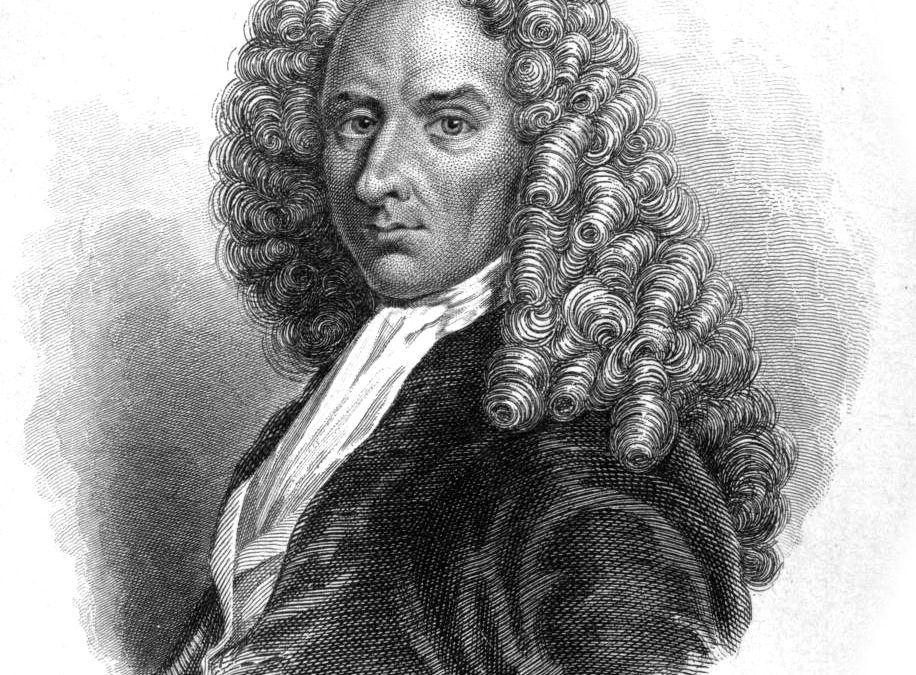
The French traveller and ornithologist, François Le Vaillant, wrote one of the most important eighteenth-century accounts of a visit to the southern Africa.
In 1790 he published his Journey into th Interior of Africa by way of the Cape of Good Hope, which is is substantially taken up with the narrative of an expedition to the eastern frontier of the colony which he undertook between December 1781 and March 1783. His Journey was translated twice into English in the year of original publication: one of these translations is anonymous, and is generally both accurate and fluent, though the language has now dated; the other, done by Elizabeth Helme, omits anything that she considered slightly improper, such as the passage in which Le Vaillant tells his readers that the Xhosa ‘commonly warm their tools with their own urine’. Hence the need for a new translation, which is being undertaken by the Van Riebeeck Society in Cape Town: volume 1 appeared in 2007, and I hope shortly to complete work on volume 2.
Le Vaillant was not an explorer. He travelled along roads used by ox wagons that already existed in the 1780s. Above all he was an ornithologist, and repeatedly insists in his narrative that the purpose of his journey was to collect specimens of birds and animals, which he shot in great numbers and sent back periodically first to Cape Town and then to Paris. Volume 1 of his Journey is taken up with an account of his journey eastwards, through the area that is now Caledon towards the site of present-day George which he described as ‘the African horn of plenty’ and the last outpost of civilization. He remained at the camp-site he named Pampoen Kraal throughout April 1782 noting, before resuming his journey eastward: ‘Now at last I was about to escape man’s dominion entirely and return a little to the conditions of his primitive origin.’ He made another lengthy stay in the area of Plettenberg Bay in June and July 1782. There he saw great potential for the development of forestry and agriculture but concluded that, due to the indolence of the Dutch East India Company, such projects ‘will, happily, not come to fruition’. Plettenberg Bay would remain as innocent as the Garden of Eden. Subsequently, Le Vaillant attempted to continue his journey along the coast eastward but, finding no way through the Tsitsikamma, he back-tracked to George, crossed the Outeniquas into the Lang Kloof, which he followed as far as the region of Humansdorp, before turning north towards Agter Bruintjies Hoogte, and finally pitching his camp at Koks Kraal, near Cookhouse on the west shore of the Great Fish River, where he remained between October and December 1782.
Volume 2 of the Journey is very different from what had gone before and is substantially given over to a description of the indigenous peoples, the Khoi and the Xhosa, that he encountered during his sojourn at Koks Kraal. In this respect Le Vaillant was faithful to a pattern set by almost all travel narratives which, like Kolbe’s account of The Present State of the Cape of Good Hope (1715), offered the reader an account of the religion, laws and customs of the non-European populations found within the borders of the colony. Le Vaillant follows a similar plan, telling his readers about the dwellings, the clothing, the child-rearing practices, the weapons, the food of the Khoi and the Xhosa, and much more besides. As he says, he spent his days talking to them ‘about anything of interest to me concerning their manners, their customs, their religion, their tastes, their resources …’. And he did so at great length: approximately 138 of the volume’s 290 pages are given over to these topics, whilst the long but very rapid journey back to Cape Town, which occupies the period from December 1782 to March 1783 is despatched in just 73 pages. Quite a contrast with Volume 1!
However, although Le Vaillant’s narrative mirrors the practice of other travels in certain respects, in other ways it is subtly but importantly different. These differences speak directly to the intellectual climate of Europe in the second half of the eighteenth century and perhaps account in part for the phenomenal contemporary success of the Travels.
In the first place the eighteenth century was the Age of Enlightenment, the Age of Reason, and the age when dictionaries first played a prominent part on the stage of European thought. Chambers Cyclopædia first appeared in 1728, and the first edition of the Encyclopædia Britannica was published between 1768 and 1771. Similar works appeared in France, notably Bu.on’s Natural History (1749 onwards) and, arguably the most important of them all, the Encyclopédie, subtitled a Systematic Dictionary of the Sciences, Arts, and Crafts. Like other works of its type the Encyclopédie sought to classify and disseminate knowledge across many fields of human activity: but its originality resides in the fact that it included information about ‘crafts’, such as printing or the smelting of iron ore, which had previously not been considered suffciently dignified to feature in a work targeted principally at an educated reading public. different Le Vaillant’s narrative feeds this hunger for the classification of knowledge across a broad spectrum of human activity. Most famously, as an accomplished ornithologist, he classifies birds, and many of those which he names in his Travels are later illustrated and described more fully in his Natural History of the Birds of Africa (1799-1808). Indeed, in respect of ornithological nomenclature, his influence is still felt today: the Bateleur eagle, for example, is so called because that is what Le Vaillant called it; while the scientific name of the Crested Barbet, Trachyphonus vaillantii, immortalizes the author of our narrative.
But Le Vaillant’s eagerness to seek out and record information ranges much more widely: he provides his reader with a list of words related to natural history in the French, Dutch and Khoi languages; he describes the method employed by the Xhosa for smelting iron ore. He even attempts a comparison between the Khoi who lived within the Colony, the Gonaqua Khoi encountered on the eastern frontier, and the Xhosa, describing a range of physical characteristics such as height and build.
But the intellectual climate of the eighteenth century was complex, and in some ways paradoxical, for alongside the cult of reason it also celebrated the unrestrained expression of emotion and, as the century wore on, the lyrical description of nature. Here again Le Vaillant provides his readers with the delights they were seeking. As he prepares to return to the Cape he bid farewell to his new-found friends on the eastern frontier, seasoning his farewells with, as he says, ‘my sorrows and my tears’. As he approaches his destination his thoughts turn backwards and he exclaims: ‘Everything was fleeing away, the rivers, the mountains, the majestic forests, the tribes of savages and their charming huts, everything was fleeing from me.’ Like Rousseau, whom he admired, Le Vaillant castigates the corruption of Civilization whilst propagating the myth of the Noble Savage and the cult of Nature.
Throughout his narrative Le Vaillant claims not only to be giving an accurate description of peoples and places, but also to be truthful in all that he says; in this respect he repeatedly contrasts his own a.rmations with those of two earlier travellers, Kolbe and Sparrman, whom he frequently accuses of retailing inaccurate hearsay or fabricating parts of their narrative. Yet, in all probability, Le Vaillant himself has not been altogether honest in the account of his journey. He has long stood accused of exaggerating his own prowess, his bravery or the diffculties he overcame; but in fact the authenticity of one whole episode in his narrative is profoundly suspect. Le Vaillant tells us that, having arrived at Koks Kraal, he decided to launch an expedition across the Great Fish River, beyond the frontiers of the Colony, and that, in doing so, he had two purposes in mind: the first was to meet King Phalo and act as a mediator between him and the settlers at a time of cross-border hostilities; the other was to go in search of survivors from the Grosvenor, which had been wrecked some eight weeks previously, on 4 August 1782, approximately 450 kilometres east of his current location. But, in 1782 Phalo had been dead for eight years, and it is highly unlikely that news of the Grosvenor could have reached Koks Kraal in such a short space of time. More obviously, the chronology of the narrative, which had been carefully documented since Le Vaillant’s departure from Cape Town, becomes defective at this point, in an obvious attempt to create a period of four weeks during which the intrepid explorer could have carried out his mission. In all probability, he didn’t. It is equally likely that Le Vaillant did not write the text of his narrative, at least in its final, published form. Le Vaillant certainly kept a journal during his travels, but several contemporary accounts assert that it was another writer, Casimir Varon, who worked these up into the narrative as we now know it. There is no conclusive external evidence of this, but a stylistic analysis of the text itself would support that conclusion. Le Vaillant grew up in Surinam and, as he tells us himself, ‘I took my first steps in the wilderness and was born almost savage.’ In contrast, the text of the Travels is very sophisticated, full of the wit and indirect allusions that were the essence of good style in the Parisian salons of which Le Vaillant had little knowledge. Just one example can serve to make this point: when Le Vaillant broke camp at Koks Kraal and set o. on the return journey to the Cape, the text says, ‘It was, as they say, the painter moving out.’ This is, in fact, a sophisticated allusion to a painting called The Painter Moving Out by Etienne Jeaurat, which dates from about 1757.
For all of the reasons outlined above, Le Vaillant’s Travels into the Interior of Africa by way of the Cape of Good Hope were very successful: at least seven French editions appeared during Le Vaillant’s lifetime, and the work was quickly translated into English, German, Dutch, Russian, Swedish, Danish and Italian. It is to be hoped that the new edition published by the Van Riebeeck Society, including Volume 2 for which I am responsible, will promote a wider knowledge and appreciation of Le Vaillant in our own day.
This is a short account of the woodcutter settlements in the southern Cape and the e.orts made by the Cape authorities to improve the living standards of the woodcutters by settling them at selected locations on clearings abutting the indigenous forests. The now extinct Knysna woodcutter as a population group had existed for over 250 years. Driven into the indigenous forests of the southern Cape in search of timber, they steadily became an isolated, poorly educated and anti-social community, a component of the Poor White community that caused much anguish for the administrators in the Cape Forests of the mid. 19th and early 20th century.
LIFE AS A WOODCUTTER
When one reads in modern literature about the dire situation of the Knysna woodcutters as told in the popular books by the late author Dalene Matthee, one is left with a feeling that these people were neglected by the authorities and left to live a life of poverty in the forests of George, Knysna and the Zitzikamma. That they were poor and uneducated is beyond doubt, but they were not always neglected.
The reason for their pitiful situation is readily attributed to the unfair treatment of the woodcutters by their masters, viz. the timber merchants and saw millers, who o.ered low prices for the timber that the woodcutters cut from the forest. To further aggravate the situation the woodcutters were seldom paid in cash, which presented a challenge when they needed to purchase a timber licence to fell the next tree. As a result of this they would be forced to borrow cash from the merchant or saw miller, thereby becoming beholden to them, who could then chose to pay the woodcutter for his timber whatever they chose. But to every argument there are at least two sides; the other side of this argument lay with the woodcutters themselves. Early observers stated that the woodcutters were the most indolent and improvident of men and that they were certainly amongst the poorest and most degraded. However, the woodcutters were of invaluable service to the foresters as the primary purpose of the Forestry Department of that time was to manage the extraction of indigenous timber from the Crown Forests in a sustainable and profitable manner. Revenue from the forest produce was needed to cover the operational costs of the Forestry Department and without these woodcutters no revenue would occur.
THE WOODCUTTER CLASS
The class of people known as woodcutters were initially attracted into the forests by the lure of ‘easy money’ to be made from the harvesting of suitable timber required for a wide range of construction applications. The lack of suitable family farmland available for distribution between the male descendants of the early European settlers, exacerbated by the large settler families, made the choice to seek employment elsewhere inevitable. Added to the many challenges of the Cape forester was the control of the random timber felling activity of the woodcutters, which was di.cult to manage as the woodcutters were widely scattered throughout the forests where conditions were both hard and primitive. The children of these woodcutter families lacked any formal education and few social graces. Infant deaths and respiratory illnesses were commonplace. Employed in timber felling from a young age, the male woodcutter was understandably lean and very strong, living on a basic diet of sweet potato and co.ee, occasionally forest game.
LIVING STANDARDS IN THE FORESTS
The living standard of the woodcutters in the forests was indeed deplorable. Even in the very early times, European travellers had described their dire situation.
In 1866 Henry B Darnell, a Member of the Legislative Assembly (MLA) for Queenstown, a resident at Knysna and owner of the Westford Farm, and who had also become an owner of indigenous forest because of this, wrote: The woodcutters, as a class, are worse o. than ever, and the deplorable state of destitution in which they are now to be found should long ago have attracted public attention with a view to their relief.
In December 1866 Henry Bryan Darnell made a detailed and passionate presentation to the Cape Parliament regarding the proper management of the Crown Forests. Resulting from this the Governor of the Cape agreed to appoint a formal Commission of Enquiry.
THE 1866 COMMISSION OF ENQUIRY
During the 1866 investigation by the Commission questions were presented to numerous informed residents about the need to improve the control of the woodcutters. The suggestion to relocate them into ‘villages’ was discussed with interested and a.ected parties and supportive comments were received from many of those interviewed. The Commissioners reported back in 1868 on their findings which included a recommendation for the selection of suitable sites for the creation of forest villages for use by the woodcutters. These woodcutter villages were to be located on the margins of the main indigenous forests and each village would consist of a number of farm allotments, which would be granted on a quitrent basis to bonâ fide woodcutters. The selected sites for settlements in the Knysna area were De Poort (which lies midway between Knysna and Plettenberg Bay), Krantz Bosch and at Yzer Nek. A site near the Hoogekraal River was selected in the George area and another site near the Sanddrift River in the Zitzikamma area.
Here each woodcutter family would be allocated a piece of land with additional commonage as pasturage on which not only could the woodcutter built a better home for himself and his family but also undertake productive farming during the closed periods of the forest. But the wheels of authority turned very slowly and little came of the recommendations made by the Commissioners Christopher Harison & Thomas Bain until much later when the Cape Parliament gained more autonomy over its own a.airs.
THE 1878 CROWN LANDS ACT AND THE WOODCUTTER LOCATION SCHEME
Finally in 1878 the instruction was given to go ahead with the woodcutter settlement scheme. But by then now well-established woodcutters who had been squatting in the interim on [waste] Crown Land with the blessing of the local authorities were not prepared to relocate. In July 1880 the Civil Commissioner for Knysna, Maximilian Jackson, clearly concerned about the defiance being expressed by certain Bernardo and Kapp families spreading amongst the other woodcutters squatting on Crown Land then set aside for British immigrants, wrote to the Commissioner of Crown Lands in Cape Town for guidance.
By 1881 a total of 196 immigrant ‘souls’ had arrived in the Southern Cape, many of whom had been successfully settled. Jackson and the Immigrant Supervisor advocated the formation of a Commission, consisting of representatives of both the Forestry and Immigration Departments, to undertake a survey of the available waste Crown Land, with the aim of satisfying the needs of both Departments whilst accommodating the various land claims being made by the woodcutters squatting on Crown Land. Only when the Commission had reached acceptance upon its findings and recommendations, could a detailed and thorough survey of woodcutter allotments be undertaken.
THE 1881 COMMISSION ON KNYSNA AND GEORGE LANDS AND FORESTS
In January 1881 the Commissioner of Crown Lands authorised the establishment of a commission to investigate the condition of the woodcutters and squatters, the Crown Forests and Crown lands generally in the George and Knysna area, with a view to the location of immigrants and woodcutters on such land as my be suitable for the purpose. The commission was also instructed to create a register of all bonâ fide woodcutters in the area, to identify possible sites for woodcutter settlements, learning from the findings of the earlier commission. The Commission began its work in April 1881. The Commissioners, having left George heading eastwards, besides reporting on a few immigrant and farm boundary issues in the area, did not find much suitable Crown [waste] Land abutting the Crown Forests for the establishment of woodcutter allotments.
The first feasible area for woodcutter settlement was found at a place known as Keur Rug, west of the Homtini River. The Commission recorded the names of the bonâ fide woodcutters and their families, between the Hoogekraal River and the Homtini River and then proceeded towards the Knysna River.
At a place called Witte Els Hoek the commissioners were pleased to find that many of the woodcutters in this locality had already settled there, under the earlier instructions of the Conservator of Forests, at this place abutting the Sour Flats Forest on waste land which the Commissioners believed at the time was Crown Land. The woodcutters had erected huts and small houses in this area, which was later referred to later as the Sour Flats location, after the name of the forest, which was situated east of the Homtini River. The Commission recorded all of the names of the bonâ fide woodcutters and their family members, between the Homtini River and the Knysna River.
The Commission continued eastwards from Witte Els Hoek, most likely following an existing bridle path, which led through the Millwood Forest to the Knysna River at the old drift , then followed an established path to the place we know today as Bu.els Nek, and in so doing would have viewed possible woodcutter allotment sites at Square Bush, Ronde Bosch, Dwars River and Bu.els Nek, in that sequence, before reaching Yzer Nek. Indeed, all of these sites were later selected for woodcutter settlement later. Proceeding further eastwards the Commission arrived at the site of the future Krantz Bosch woodcutter settlement, immediately west of the forest by that name. As before, they recorded the names of the woodcutters and their families settled there.
The Commissioners then travelled southwards to the Pheasant Hoek Forest. Here they found enough suitable land on Crown Lands Lot AB and Lot AD for 10 families with more than adequate commonage.
The commission then moved on from Krantz Bosch to the Blaauw Krantz River. Here they identified a possible woodcutter settlement location at the western entry to the future Blaauw Krantz Pass. Returning along the coastal route to Knysna the Commissioners evaluated the possibility of woodcutter allotments in the Harkerville area. The survey by the Commission was completed during April 1881.
In the Report of the 1881 Commission were certain valuable observations, recommendations and conclusions: A total of 165 families of woodcutters and 6 squatter families, giving respectively 884 souls and 27 souls, had been registered. All persons registered as woodcutters were actively involved in woodcutting. Two thirds of these were of European extraction, mostly Dutch. In order to stimulate improvement they should be brought together in villages or locations in order to facilitate education and civilisation amongst the woodcutters.
The Committee recommended the grant of 4-acre [2 hectare] allotments of arable land for each woodcutter family, with commonage where possible. The allotments should be granted on a fixed quitrent basis. The grant was to be made on condition that the land granted should not, at any time, be mortgaged or sold, or otherwise disposed of, to any person other than a bonâ fide practical woodcutter. No person should be the holder of more than one allotment, either in his own name or that of any other person, be it his wife, minor child, or not. A lot or two should be reserved at each settlement for a school and schoolmaster.
THE 1882 LAND CLAIMS COMMISSION
In July 1882 the Commissioner of Crown Lands and Public Works, the Honourable John X Merriman, authorised the establishment of a Commission appointed to arrange for the settlement of the Claims to Land by Wood-cutters and Squatters in the Division of the Knysna. The duty of the Commission was to call for applications from persons desirous of possessing land, either as woodcutters, or on the grounds of having been dispossessed of land on which they had settled earlier action and to evaluate and decide upon the merits of these applications. The actual allocation of ground would require a proper survey and the Commissioners were to make clear to each applicant the boundaries of the land assigned to them.
The Commissioners included in their report details about the selection of bonâ fide woodcutters and the surveying of allotments at most of the previously identified settlement sites. They took guidance from the woodcutter lists of the 1881 Commission on Knysna and George Lands and Forests and genuine woodcutters were now formally allocated lots of farmland at nine locations:
• Keur Rug & Kraai Bosch (Referred to as Barrington A & B)
•Yzer Nek
•Dwars River Valley
•Ronde Bosch
•Buffels Nek
•Square Bush
•De Poort (Harkerville)
•Pheasant Hoek (Fisanthoek) and
•Covie.
The assigning of allotments to the woodcutters at two other settlements below was delayed. These were:
• Sour Flats The laying out of this settlement, often referred to by its smaller components Witte Els Hoek and Braame Kraal, also known later as
Balmoral and today known as Bibbey’s Hoek, was only accomplished in 1890 due to a boundary dispute with the Barnard family, owners of the Leeuwenbosch Farm, and
• Krantz Bosch This location was only surveyed and marked out in 1890 due to the need to cancel an onerous lease agreement entered into by 8 families of woodcutters settled earlier on Krantz Bosch Crown Land.
Of the 144 lots surveyed and marked out, 20 lots remained unassigned to woodcutters. But, as pleased as the woodcutters may have been to receive this free grant of quitrent farm property from the Cape Government, many of these woodcutter allotments were soon abandoned; some allotments were never ever occupied.
These early Deeds of Grant were strangely silent on re-sale restrictions which was contrary to the recommendations of the Commission on Knysna and George Lands and Forests of 1881.
THE 1890 LAND CLAIMS COMMISSION
The Sour Flats Settlement
By 1890 the Witte Els Hoek land boundary dispute between the Cape Government and the owners of the Leeuwenbosch farm had been resolved in favour of the Barnard owners. Also, the onerous lease agreement at Krantz Bosch had been cancelled and approval given to incorporate additional Crown [waste] Land into the scope of the proposed woodcutter location, but the survey of the woodcutter allotments and their allocation had not yet been finalised. In May 1890 a new Parliamentary Commission, known as the 1890 Land Claims Commission, was instructed to continue the work of the 1882 Land Claims Commission and to complete the allocation of farm lots to the woodcutters at the Sour Flats and Krantz Bosch Locations. The Commissioners then performed a rough survey at Sour Flats of a total of 29 lots, made up of 26 lots of two morgen each, together with a one morgen lot for a school, a small one morgen lot on the eastern limit as a bu.er between John Barrington’s Lawnwood farm, and a plot of land set aside as a common burial ground. The boundaries of the woodcutter allocations were then confirmed and beacons placed.
THE ADDITIONAL 1890 CONDITIONS OF GRANT
The Commission explained to the allottees that the tenure of land would be subject to decision of Government, subject to additional terms and conditions to those imposed earlier, as mentioned below: No allottee shall sell his allotment to any person who is not a practical woodcutter and without written certification giving the approval of the Conservator of Forests, and should dispossession occur by the excussion or insolvency of an allottee, a creditor shall only have the right to sell the property to a practical woodcutter, with written approval of the Conservator of Forests.
THE KRANTZ BOSCH SETTLEMENT
Later in the year the Commission met with the woodcutters at Krantz Bosch. The Commissioners compared the applicants that had assembled here with original list of woodcutter applicants as recorded in the register of 1881 and identified that the original 16 woodcutters and their families were still keen to receive allotments. Two morgen allotments were marked out, where possible, to accommodate the existing woodcutter houses using the same approach that had been adopted at Sour Flats. The conditions of grant for this location were based on those adopted at Sour Flats, specifically also including limiting resale of the 16 lots surveyed to practical woodcutters only.
THE LAND CLAIMS COMMISSION’S TASK IS DONE
The schedule below summarises the result of both the 1882 and 1890 woodcutter allotment exercises, with the lots provisionally allocated shown. Note that some discrepancies exist in the schedule because not all of the allotments laid out were made available to the woodcutter applicants
e.g. some lots were made available for schools, burial grounds and other forestry purposes. The task was complete and the Commissioners of 1890 would have felt justly proud that they had finally completed what the early Commissioners had set out to achieve. During the Lands Claim investigation the Commissioners had prepared lists of all of the initial woodcutters o.ered allotments at the eleven locations; these lists were submitted to the Commissioner of Crown Lands with their reports of 1882 and 1890. Whilst the initial work was now complete, only the future would tell how successful the scheme would be. Location No. lots size Lots No. of
Speaker: Brenda Sheperd It was a volatile time in South Africa at the outbreak of the First World War. Only 12 years had passed since the end of the Anglo Boer War which had bitterly divided the nation. Those South Africans of British descent and Afrikaners loyal to General Botha automatically regarded themselves involved in the war while another section of Afrikaners openly rebelled grasping the war as an opportunity to regain independence outside the British Empire. Eight years had passed since the Zulu Rebellion where between 3000 and 4000 Zulus had been killed and the Zulu king, Dinizulu deposed and sent into exile. In addition, the promulgation of the Land Act in 1913 which legislated Africans were not able to own or rent land outside of designated reserves; an area of approximately 7% of South Africa further served to alienate the black South Africans. In 1916 while the Battle of the Somme was still raged and SA mourned its dead of Delville Wood, the British Government asked General Botha in an exchange of correspondence not made public to recruit 10 000 black soldiers to serve in labour battalions under Imperial command in France in order to relieve active white men for duty. Imperial command was important to Botha as it meant that little or no expense to South Africa was involved so the matter would not have to be approved by Parliament where the Opposition could be expected to be hostile to the idea instead it could be dealt with on an administrative level. From around South Africa and from the British Protectorates of Basutoland, Bechuanaland and Swaziland men came forward. Among them were chiefs, sons of chiefs, labourers from the mines as well as a number of educated men. Although many of these men would have preferred to fight, they saw their participation in the war as a means to show loyalty to King and country in the hope that after the war, the lot of Africans in South Africa would improve. For others, it was the adventure to travel, to see the lands across the water that they would not otherwise have the opportunity to do. There was also a financial benefit; not only would those who enlisted would be exempt from hut tax but the pay given to the black soldiers was in excess of the amount South African white soldiers in France were receiving. Black soldiers were to receive 3 pounds per month while the men of the first infantry got 1 Pound. Also, the African soldiers enlisted for a period of 12 months whereas their white counterparts enlisted for the duration of the war. By train, they were sent to the military depot in Rosebank, Cape Town. Here the recruits were issued with uniforms and drilled like regular soldiers. Although, they did not carry guns they were nonetheless subject to military discipline and martial law. On 16 January 1917, 802 black soldiers together with 5 white o.cers and 17 NCOs boarded the SS Mendi in Cape Town harbour. There is a misconception that most of these men came from the Eastern Cape but sources show that 287 of these men were from Transvaal, 139 from the Eastern Cape, 87 from Natal, 27 from Northern Cape, 26 from the Orange Free State, 26 from Basutoland, eight from Bechuanaland (Botswana), five from Western Cape, one from Rhodesia and one from South West Africa. The SS Mendi was a cargo ship with a gross tonnage of 4230 tons, 370 feet in length and 46 feet in width. Of the four holds, three were converted to troop accommodation. Wooden bunks were fitted which extended up from floor to ceiling like the shelves of a bookcases, each to accommodate 4 soldiers. Space allocated to each man was 0,87 of a cubic meter in an area that had little light or ventilation. SS Mendi was commanded by Captain Henry Yardley who had been at sea for many years and had been a master of a number of ships since his first command in 1901. The ship was manned by a crew of 88 including the o.cers, who were mostly British. Together with the number of soldiers, this brought the total to 915 men on board of 4230 tons. On board, the Mendi carried 6 lifeboats which could accommodate 298 persons. These were allocated to the captain and the crew with few places allocated for soldiers. For the soldiers and their o.cers, 43 life rafts were allocated. These were tied down at various places around the ship; on top of the wash houses and holds. On 16 January 2017, the SS Mendi set sail from Cape Town harbour in convoy of five other troopships under the escort of the British destroyer, HMS Cornwall. Unlike the Mendi, all were ocean going liners before the war. Amongst them was the Kenilworth Castle carrying 1500 South African troops while the others all carried Australian troops. The convoy stopped at Freetown in Sierra Leone but no shore leave was given to the troops on board the Mendi. Instead, they assisted in o.-loading the cargo of gold on board the Mendi and transferring it to the Cornwall and loading supplies in its place. The following morning, the Cornwall set sail leaving the convoy to face the remaining two weeks of voyage unescorted through waters known to have enemy submarines. After 34 days at sea, the convoy arrived in England. At 5pm on 20 February 1917, the Mendi set sail from Plymouth for Le Havre under escort of HMS Brisk. At 04.55, in thick fog, SS Darro rammed the Mendi at full speed almost cutting the ship in half. She struck on the starboard side between No.1 & 2 holds where a many soldiers lay sleeping. During the voyage from Cape Town, boat drill had been practiced every day. Now in the pitch black, the whistle shrilled four short blasts for the men to fall in. Just as they had practiced, the men assembled at their stations strapping on the lifebelts that had been issued to them at the start of the voyage. There is no record of panic. Within minutes, the deck tilted to one side as the holds began to fill with water. The Mendi sank within 25 minutes. In London, at the instigation of the South African Government together with the Anti-Slavery and Aborigines Protection Society, a hearing was held to establish causality of the large loss of life. Of the 802 soldiers on board 609 had perished together with Lieutenants Emslie & Richardson and 6 white NCOs. A total of 616 South Africans and 30 crew members of the Mendi had perished in the icy waters of the English Channel. Amongst the soldiers who perished was 64 year old Xhosa minister, Isaac Wauchope Dyobha. His conscience would not let him go to war as a man of God, so he enlisted as an Interpreter. Educated at Lovedale in the Eastern Cape, Isaac spoke English, Xhosa, Zulu & Sotho and he had a good understanding of Greek & Latin. Like many others he thought that to answer the call of king and country would be a great opportunity to acquire a just and recognised status as loyal subjects of the Crown. The legend surrounding Isaac Wauchope Dyhoba and the death drill on board the sinking ship has never been substantiated but it forms part of oral tradition. As the ship was sinking, he is purported to have called out to the soldiers that were too petrified to jump into the black waters: “Be quiet and calm, my brothers, for what is taking place now is exactly what you came to do. You are going to die, but that is what you came to do. Brothers, we are drilling the drill of death. I, a Xhosa, say you are all my brothers, Zulus, Swazis, Pondos, Basutos, we die like brothers. We are the sons of Africa. Raise your cries, brothers, for though they made us leave our weapons at our home, our voices are left in our bodies.” Xhosa poet, S.E.K. Mqhayi wrote two poems about the South African Native Labour Contingent. In his poem Ukutshona kuka Mendi (The sinking of the Mendi) published in 1927, he makes no mention of the death dance. At the inquiry, Captain Stump was found to be guilty. It was found that after the Darro had struck the Mendi, she had reversed out and came to a stop within 200 yards of the sinking ship. For 4 hours, the Darro remained stationary. On board, the voices and cries of men in the water could clearly be heard through the fog but no order was given to lower a lifeboat even after 2 life boats from the Mendi came alongside and survivors reported that a troopship had been sunk and soldiers were in the water. It was found that had Stump got his boats out as soon as he found his ship was in no danger of sinking, many more lives would have in all probability been saved. As a result, his master’s licence was suspended for a period of one year. The Report of the Court was printed and circulated to interested parties. Thereafter, it was classified a secret document not to be released for the next 50 years. The 195 survivors went on to France where they worked in the harbours unloading ships, digging trenches, felling trees and in the quarries. They were housed in closed compounds similar to the South African mine compounds at the time. On 10 July 1917 at Abbeville in France, King George V, Queen Mary and the Prince of Wales together with Sir Douglas Haig inspected a parade of o.cers and soldiers of the South African Native Labour Contingent. Amongst those soldiers chosen to meet the King was Corporal Alfred Tshingane, nephew of Zulu Chief Dinuzulu. Chief Mamabolo was introduced to the King. He came from near Pietersburg in the Northern Transvaal. Not only had he sent hundreds of his men to the army, he had come himself although he was advanced in years. Also present were 6 black soldiers who had been through German South West Africa, 5 of whom had also served in German East Africa. It is on record that the King was much impressed with the fine appearance and dignified and soldierly bearing of his black subjects. A source of much bitterness was the non-awarding of medals to the black South African members of the Contingent though awards of the British War Medals were made to their white o.cers and NCOs and to the black soldiers of the Protectorates. The British Government awarded this medal in silver to white and in bronze to non-white soldiers who had the appropriate service. The Contingent soldiers qualified for it and the British Government approved the award but the South African Government could not see its way to issuing the medals. Some of these men signed up for Second World War and at the end of it, they received their medals. The final decision regarding the non-issuing of medals seems to have been taken in 1925, by which time the Nationalist-Labour coalition was in power, General JBM Hertzog was Prime Minister. It was only in 1974 that the wreck of the SS Mendi was identified when a diver discovered a plate on the ocean floor. By the insignia of the ship.owner, British and African Steam Navigation Company, the identification was made. The Mendi rests 40m below the surface in deep, murky, water. She sits upright on the sea bed. Parts of the bow and stern are quite well preserved but she has broken apart in the middle. Parts of the boilers and engine can be seen. Although, the wreck has been declared a war grave, pieces have been brought to the surface by divers as souvenirs or to sell. Some have been given to museums in Cape Town, Port Elizabeth, and on the Isle of Wight. Today, the memory of the men of the Mendi lives on. The highest award for valour bestowed on South Africans is the Order of the Mendi. The South African Navy has a corvette named SAS Mendi as well as a strike craft named Isaac Dyobha. “It may be too late to put right a wrong which has happened so long ago but remembering their names will bring honour to their lost souls.” The words of a Sangoma given to me during the course of my research. 13th March 2016
Well-known Plett thespian, raconteur and committee member of The Van Plettenberg Historical Society, David Hall-Green, tells us about the ill-fated Portuguese ship, known to us as the “San Gonzales”, which ran into serious trouble in our bay.
1630: Padrão of the São Gonçalo
It seems that a group of about 100 sailors off the Portuguese trading ship, São Gonçalo, were the first Europeans who spent any significant amount of time in the area we now call Plettenberg Bay. They were en route back from India to Portugal in 1630, carrying a cargo of pepper. They had actually stopped in the bay to make some repairs to the ship when a huge storm hit the bay and claimed the ship as well as 150 of their crewmen. The 100 survivors managed to swim ashore and made the Piesang Valley their home for about 8 months, befriending the Khoisan as they did so and building a church. They spent their time here building 2 boats from the remains of the São Gonçalo and the timber supplied by the surrounding forest. Just before they left the Bay, they erected a stone marker (padrão) on the shore. This was the first ‘Plett beacon’. The padrão was re-discovered in 1980. It bore the inscription (in Portuguese) “Here was lost the ship São Gonçalo in the year 1630.” Sadly, the story of the São Gonçalo ended in even further tragedy: although the sailors were eventually picked up by other ships of the Portuguese fleet who brought them back to Portugal, one of those ships sank just as it entered the Lisbon harbour, with the loss of everyone on board – including some of the survivors of the São Gonçalo.
Our final event for the year at Fairview Estate was a resounding success. The weather behaved, and we sat on the terrace feasting our eyes on the Tsitsikama mountains while listening to Andrew Rattray’s fascinating tales. Andrew’s talk was followed by a delicious curry lunch. Unfortunately, technical issues occurred during this recording and the early part of Andrew’s talk was not recorded.
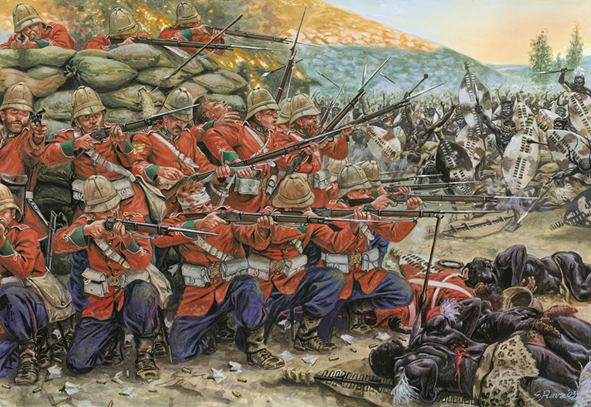
We will certainly be returning to Fairview next year to hear more about the Rattray family and their close association with the Natal battlefields and the people involved on both sides of the great battles.