
Early history of the Dutch Reformed Church in the Cape
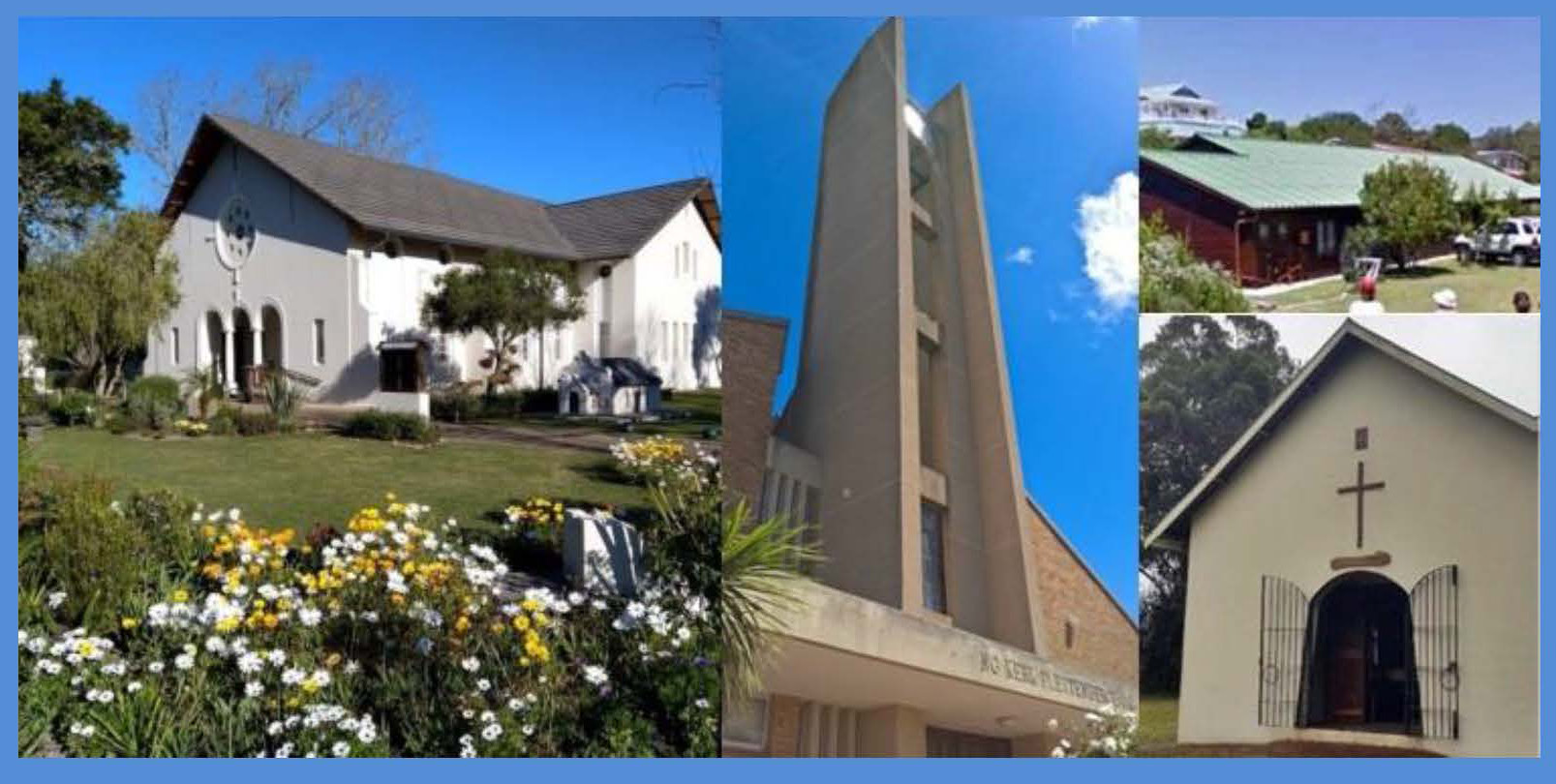
The Plettenberg Bay Dutch Reformed Church’s history is closely connected with the history of the Dutch Reformed Church in South Africa.
With the arrival of the first Dutch colonists at the Cape in 1652, led by Jan Van Riebeeck, the Christian faith also arrived in the country. Since most of the Verenigde Oost-Indiesche Compagnie’s (VOC) officials were members of the Reformed Church of the Netherlands, their Protestant version of Christianity was carried over to the new trading post at the southern tip of Africa. According to tradition, Van Riebeeck started the establishment of the colony with a prayer.
Along with the first arrivals came a missionary called Willem Wylant, who was given the task of leading most of the religious activities. If visiting ships might have had a minister on board, these persons were also enlisted to administer the sacraments. The first official minister, Rev. Johan van Arckel, arrived in the Cape in 1665 to serve the first congregation, still known today as the Groote Kerk in Cape Town.
Along with the expansion of the colony and the accompanying business and farming activities, the church also flourished. Fifty years after 1652 there were already 260 people, who were in the service of the VOC, some of whom were exempted as free citizens. Of them, 38 were farmers.
The town of Stellenbosch was founded in 1680 on the Eerste River. Later “De Paarl” followed in 1687 along the Berg River. In 1686, the second congregation was established in Stellenbosch. The church was further boosted in 1688 by the arrival of the first 200 French Huguenots, Protestant believers who had been expelled from France by the Catholic Church. This led to the birth of a third congregation in Paarl in 1691.
With the opening of the first Synod on November 2, 1824, there were already 14 congregations of the church.
Owing to the eastward expansion of farming activity, grazing rights were granted to farmers in the area between Mossel Bay and George as early as 1713.
After the “good wood” between Riviersonderend and George had mostly been cut down, the VOC established a forestry outpost on the farm Zwartrivier, near what is today George. When Secunde J W Cloppenburg visited “Outeniqualand” in 1768, he noticed that there were already 14 farms between Mossel Bay and the Knysna River. Since many of the people were destitute, their income continued to be supplemented by their original contracts for cutting wood. The ninth congregation of the Dutch Reformed Church came into existence in 1813 in George. In 1851 the Dutch Reformed Church of Knysna seceded from the George congregation. Plettenberg Bay then seceded from Knysna in 1930.
After the British military forces took over the Cape Colony from the Dutch in 1806, ministers from the Netherlands were not as enthusiastic to live so far from their homeland, while the British government was not particularly keen to have them either. Presbyterian ministers from Scotland were then brought to South Africa and had a huge impact on the further development of the Dutch Reformed Church. One of the most famous among them was the Rev. Andrew Murray. In 1859, the church started its own training centre for ministers in Stellenbosch.
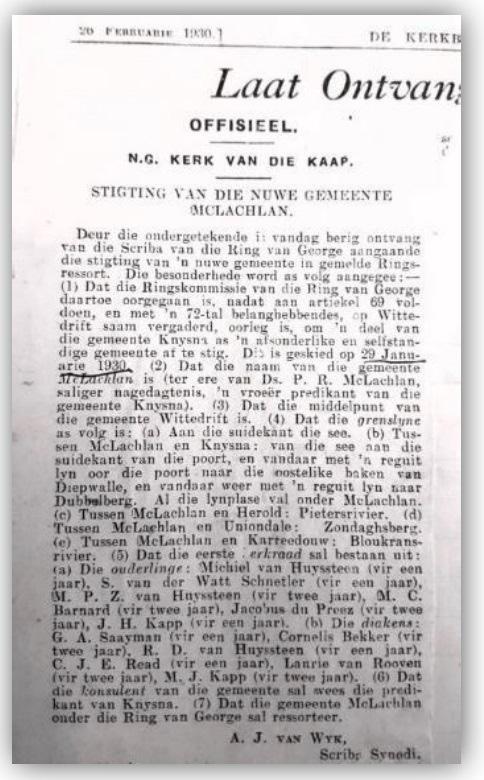
The official announcement of the founding of the congregation, as appeared in De Kerkbode, February 1930
During 1929 the church council of the Dutch Reformed Church (DRC) of Knysna began to talk about secession to the east, since the congregation’s territory had become too large to be effectively served by just one minister. On 29 January 1930, the Presbytery Commission of George met with stakeholders on the farm “Wittedrift”.
At this meeting it was decided to divide the Knysna parish into two separate congregations: Knysna and Plettenberg Bay. On 26 February 1930, therefore, a proclamation declaring the foundation and setting the boundaries of the Plettenberg Bay congregation appeared in the DRC mouthpiece De Kerkbode.
The first big problem was where the centre of the congregation should be located. Of the 75 people who attended the meeting, the majority felt that the centre should be in Plettenberg Bay.
The representative of the Presbytery Commission, however, felt that it may not have been wise to leave the choice to the local church council. Determined rather to make a neutral decision themselves, they decided to make Wittedrift the centre. The reasons given later were that there was enough water and pasture for the oxen that drew the wagons back then. Furthermore, the settlement already included a school building and cemetery.
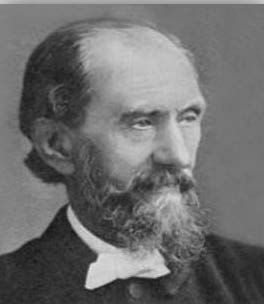
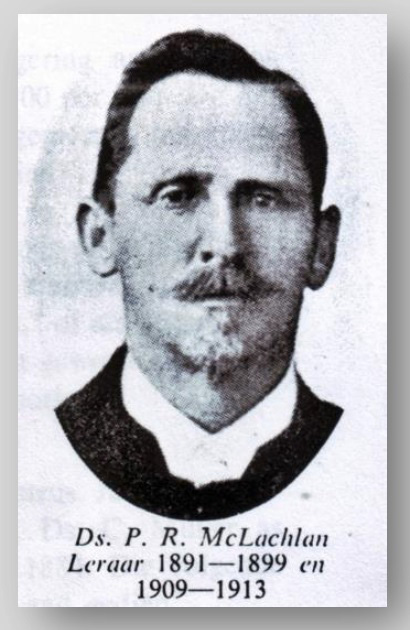
The Presbytery Commission also decided on a neutral name for the congregation, that of a former minister of the Knysna congregation, Rev. P R McLachlan. From 1930 until shortly after the inauguration of the new church complex in Plettenberg Bay in 1987, the congregation was known as the “Dutch Reformed Church McLachlan”.
The Presbytery Commission’s decision about the centre of the congregation led to unhappiness, which caused tension in the congregation. The aggrieved first turned to the Presbyterian Commission, but finally appealed to the Scribe of the Synod.
For a long time, it seemed that there would be no solution to this problem. By 1935, however, the congregation’s first minister was able to gratefully report to the Presbytery of George that a peaceful solution had been found. The report reads: “Through God’s goodness and grace, the congregation of McLachlan obtained the cooperation, unanimity and spiritual unity for which it had so earnestly waited.”
As a result of the global depression, it was only in November 1930 that it was possible for the church council to call on a minister. At first, Rev. A F “Oupa”
Weich performed the most necessary duties in the congregation on a relay basis.
Rev. P H Coetzee was confirmed as the first full-time pastor later in 1931. He and his family lived with the Van Huyssteens on the “Wittedrift” farm for six months, until they were able to rent their own house on the “Wadrift” farm. At this stage, there was still no church or parsonage and services were held in a classroom.
The first priority for the church council, therefore, was to build a parsonage. An amount of £850 was budgeted, but the nearest quote was £1,213. The decision was then made to increase the budgeted amount to £1,000 and the local farmers provided free gravel and sand as thanksgiving offerings. The parsonage and later the church building and church hall were all built on the land that M P Z (“Thys”) van Huyssteen donated to the congregation in 1931. The Coetzee family were then able to move into the parsonage in 1932.
On May 5, 1934, the church building was consecrated. The building had been erected at a cost of £2,500. At that time, there was seating for at least 600 members on solid, yellowwood pews. The pulpit was made of witels.
In 1938, the church council decided to build a church hall, with rooms for communion attendees, in Wittedrift.
It is important to remember that the collapse of the New York Stock Exchange in October 1929 gave rise to a global depression. In 1930, it also hit South Africa. Its consequences were felt deep in the timber forests of the Southern Cape.
Owing to the economic realities of the era, the congregation struggled to stay afloat in the early years. The timber industry, which was largely export oriented, was hit particularly hard. Foresters – a core part of the members of the congregation – were among the lowest paid workers in the country, with a wage of £2 per month.
Since farmers, bywoners, and forest workers made up the largest part of the congregation, the church could not always cope financially. For some years, the congregation was officially classified as “needy” and received a regular grant-in-aid from the DRC’s Poor Care Commission.
By 1943, the congregation was still in need and was struggling with a heavy debt burden. The new minister in Wittedrift, Rev. Strydom, began with a grand effort by going from ward to ward and personally making calls to parishioners. Within one year, he had raised enough funds to pay off the debt burden. Congregation members considered it a miracle. The needy status of the congregation was finally a thing of the past.
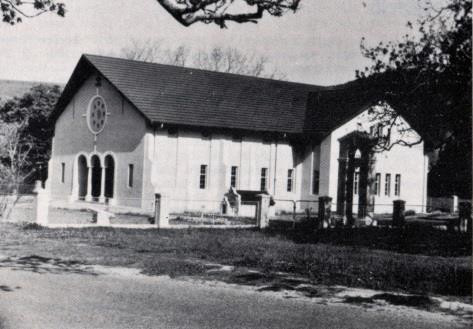
On 20 October 1934, in order to expand the ministry, the church council decided to build a hall where the “Le Vaillant” town-house complex now stands in Plettenberg Bay’s town centre. This church hall was consecrated in 1935.
By September 1982, the coastal town had grown significantly as a preferred holiday and retirement destination. The church council then began to reflect on the future of the congregation, since the plot of land on which the church hall stood was too small for an extensive church complex.
The Presbytery Planning Commission of the Presbytery of Knysna was asked to help the congregation with this planning process. A report was presented to the church council in May 1983. The most important finding was that a suitable church complex on Plettenberg Bay has become a necessity.
On 23 February 1983 it was decided to appoint an assistant preacher for the congregation. At the same time, it was decided that the evening services in Plettenberg Bay would be replaced with morning services from May 1983.
Eleven church council members from Plettenberg Bay requested a “Special Church Council meeting” on 16 November 1983 to discuss the possibility of secession. At that meeting it was decided not to secede, but to build an efficient church, hall and rectory in Plettenberg Bay. The new church complex was put into use on 8 August 1987.
An important decision that was also taken in 1983 was that the congregation would have four ministerial points: Plettenberg Bay, Wittedrift, Harkerville, and Nature’s Valley.
Further back in April 1936, a fund had been established for the construction of a church hall at what was known as “Grootbrak” (modern-day Harkerville) and in 1949 the church council had decided to purchase a piece of land, with a school building on it. During the following year, land, opposite the school building, had been donated for a cemetery. Still later, the school building was demolished and a neat church hall was erected. Since 2003, worship services have been held monthly in the church hall (known as the “Melkweg Kerkie”) in Harkerville.
In Nature’s Valley, religious services began as early as 1973, during the December holidays. At first, the church services were held under a tree. After a lease agreement with the State had been concluded, however, the church was allocated a plot of land in St George’s Road and a simple wooden hall was built. Local members contributed to the construction of the building and worship services were offered with the help of vacationing ministers. Since 2002, a monthly worship service has been held in the church hall at Nature’s Valley.
In 1991 the name of the entire church community was changed from the “DRC McLachlan” to the “DRC Plettenbergbaai”. The old, geographical division of members has been replaced by a concept of free association.
Twice a year, the four ministerial points of the congregation come together in one Joint Communion. In January, it is held in Wittedrift, which coincides with the parish foundation’s anniversary. In August, the Joint Communion is held in the church building in Plettenberg Bay, to coincide with the anniversary of the dedication of the church building in Marine Road.

For more information on the Church go to ngkerkplett.co.za
Ministers in Service of theDutch Reformed Church Plettenberg Bay
Eerw A F Weich (1930 – 1931)
Ds P H Coetzee (1931–1942)
Ds J D W Strydom (1943–1946
Ds C C Kritzinger (1946–1967
Ds A G du Toit (1967–1972)
Ds J A C Scholtz (1972–1980)
Ds A C Barnard (1980–1985)
Ds E J J Dippenaar (1985–1994)
Ds L Oosthuizen (1992–2001)
Ds W B Smith (1994 – 2017)
Ds C J du Preez (From 2001)
Ds F Cilliers (2017 – 2023)
Ds D J Pretorius (2023 – 2024)
Ds N Weeber (2023-2024)
Bibliography
CXPress, 2011: Part I, 9 February; Part II, 23 February; Part III, 4 March; and Final, 13 March.
Andrew Duminy: “The Tide Turned at Plettenberg Bay”, VPHS Bulletin, vol.3 no.1, Plettenberg Bay, November 1986
Leigh Dunn: Piesang Valley – A brief history, privately published
Dr Gustav Fischer: “The Bitou River Valley & Wittedrif”, VPHS Bulletin, vol.1, no.2, Plettenberg Bay, November 1981
Wynand Harmse and Rikus Truter, Die Bitou Kruik, n.d.
Wittedrift High School 137-Year Commemorative Booklet, Plettenberg Bay, 2000
Mike Kantey: “The De Poort Murders of 1802: A United Front of the Khoekhoe Gounaqua & AmaGqunukhwebe”, VPHS Bulletin, Plettenberg Bay, November 2014
David Peter Metelerkamp: Still Waters and Green Pastures: The Ganzvlei Story, self-published, Goukamma River, Knysna district, 2008
N G Congregation McLachlan Festival Brochure, Plettenberg Bay, 1980 Rev M T R Smit, MC
Memorial Book N G Congregation Knysna, 1851-1951
Strategic Theological Planning of the N G Congregation Plettenberg Bay Report, July 1996
Tertius van Huyssteen: “The story of the Van Huyssteens of Wittedrift”, VPHS Bulletin, vol.2 no.4, November, Plettenberg Bay, November 1984
Monica Wilson & Leonard Thompson: The Oxford History of South Africa, Oxford University Press, 1973
Minutes in the Church Office, NGK Marineweg, Plettenberg Bay
Interviews with Rev. Chris du Preez, Kysie van Huyssteen, Christo van Rooyen
Correspondence with Andrie van Rooyen